Sunday, January 28, 2007

More on Returning Quarterbacks


A few days ago, I took a look at how teams who returned their starting (or at least experienced)quarterback performed compared to teams that did not in 2006. First I looked at overall records. However, those can be misleading for several reasons. First and foremost, all teams played at least 12 regular season games in 2006. Teams that played in bowl games could play up to 14 games. The most games any team played in 2005 was 13 games. Often times this extra game is a non-conference cup cake against a Sun Belt or non-Division IA school. To make the comparison more fair, this time we will look at each team's record only in conference games. With the big time conferences having as many as 12 teams, this is not totally unbiased because some teams can still have substantially easier conference slates based on since they do not play everyone in the conference. Still, 2006 is a good year to examine this phenomenon because no teams changed conferences between 2005 and 2006, keeping ot such lurking variables as conference strength. For example, it would not be fair to look at compare conference records between 2004 and 2005 because a number of teams changed conferences (Boston College went from a watered down Big East to the ACC, while Cincinnati, Louisville, and South Florida went from Conference USA to a BCS league, TCU went from Conference USA to the Mountain West, SMU, Rice, UTEP, and Tulsa went from the WAC to Conference USA, and Central Florida and Marshall went from the MAC to Conference USA). I think that covers them all. Some final notes: Conference title games are excluded so that teams from the same conference all have the same number of games played, and 4 independents (Notre Dame, Army, Navy, and Temple) are not included in this data set. With that out of the way, here is how the two groups of teams performed.

The teams (62 total) that returned an experienced quarterback (at least 100 pass attempts the previous season) and had him play significantly (at least 100 pass attempts this season) in 2006 went a collective 238-248 in conference play in 2005. This is a winning percentage of .490 and equates to just under a 4-4 record (3.91-4.09) in a standard 8 game conference season. In 2006, those same teams improved to 269-223 in conference play. This is a winning percentage of .547 and equates to a 4.37-3.63 record in a standard 8 game conference season. This is an improvement of roughly 1/2 game in the conference standings.

The teams (53 total) that did not return an experienced quarterback in 2006 went a collective 214-204 in conference play in 2005. This is a winning percentage of .512 and equates to a conference record of 4.10-3.90 in a standard 8 game conference season. In 2006, those same teams regressed to 188-234 in conference play. This is a winning percentage of .445 and equates to a conference record of 3.56-4.44 in a standard 8 game conference season. This is a regression of a little more than 1/2 game in the conference standings.

21 teams (33.9%) that returned an experienced quarterback improved by at least 2 games in the conference standings. 8 teams (12.9%) improved by at least 3 games in the conference standings. 13 teams (21%) declined by at least 2 games in the conference standings. 5 teams (8.1%) declined by at least 3 games in the conference standings.

10 teams (18.9%) that did not return an experienced quarterback improved by at least 2 games in the conference standings. 5 teams (9.4%) improved by at least 3 games in the conference standings. 21 teams (39.6%) declined by at least 2 games in the conference standings. 10 teams (18.9%) declined by at least 3 games in the conference standings.

Those are the results. Dissect them at your leisure. I will say this, it appears that it may not be as valuable to return your starting quarterback (12.9% that returned theirs improved by at least 3 games and 9.4% that did not improved by at least 3 games) as it is damaging to have him leave (more than double the chance--18.9% to 8.1% of declining by at least 3 games). As promised, in a few more days, I'll look at how BCS and non-BCS schools compare when they return and lose their quarterback.

Wednesday, January 24, 2007

How Important is the Quarterback Position in College Football?


Way back in August, I made a bet, or a wager if you will, with a friend of mine. Now my friend happens to be a huge Clemson supporter. Our bet was simple: If Clemson won 10 games, I would be forced to pay up, and if Clemson did not win 10 games, he would be forced to pay up. My main rationale for going against the Tigers despite a favorable schedule, was that they would be breaking in a new starting quarterback. After manning the position for what seemed like a decade, Charlie Whitehurst had been drafted by the San Diego Chargers and a senior named Will Proctor would be taking over. Clemson began the season 7-1, but imploded down the stretch thanks in part to the lackluster play of their signal caller. Certainly the defense and special teams were also to blame, but Proctor played poorly in two of the losses (Virginia Tech and Maryland) and for over 3 quarters in the bowl game against Kentucky.

What I want to do is see what happens to teams that break in a new starting quarterback. To do this I divided all 119 Division IA teams into two groups. Those that returned 'experienced' quarterbacks and those that did not. I defined an experienced quarterback as one that threw at least 100 passes in the preceding season (2005). Additionally, those quarterbacks also had to have significant playing time in 2006, lest their experience just rot on the bench. So teams that are coded as 'experienced' had the same quarterback throw at least 100 passes in both 2005 and 2006. I know 100 is just an arbitrary cutoff point, but it had to be somewhere. 63 teams returned experienced quarterbacks this past season and 56 did not. Here's what happened.

Teams with a returning experienced quarterback had a collective record of 375-357 (.512) in 2005. When their experienced quarterbacks returned in 2006, their combined record jumped to 469-337 (.582). That's an increase of roughly 7 percentage points in winning percentage.

Teams who lost their quartebacks after 2005 had a collective record of 341-309 (.525) in 2005. When they lost their quarterbacks, they regressed to a combined 316-384 (.451) in 2006. That's a decrease of roughly 7.4 percentage points in winning percentage. Interesting how the gain in winning percentage among teams that returned their quarterback is almost equal to the losses in winning percentage of teams that lost their quarterback.

Here's more fuel to the fire that returning your quarterback is very important. Random fluctuation is common in sports, so there is not a great deal of difference in a team going 7-5 one season and 6-6 the next, at least in the quality of play. However, for teams that return an experienced quarterback, there is a very good chance they will improve by at least two games. 23 of the 63 teams (36.5%) improved by at least two games in 2006. To be fair, nearly a fourth, 14 of the 63 teams (22.2%) regressed by more than 1 game (at least one and a half games). Since schedule length varies in college football with conference title games, bowl games, and the 'extra' Hawaii games, an example for a one and a half game difference would be going 8-4 one year and 7-6 the next (1 in the win column and 2 in the loss column).

For teams that had to start over at the quarterback position, only 9 of 56 (16%) improved by more than two games in 2006. Plus a whopping 25 of the 56 teams (44.6%), or more than double the percentage for teams that returned an experienced quarterback, declined by more than 1 game.

That's all for now. Stay tuned unil this weekend or early next week, when we'll look at conference record (perhaps a better indicator of team strength with no Texas State cupcakes) for teams that do and do not return experienced quarterbacks as well as a comparision in what happens to BCS and mid-major schools when they lose quarterbacking experience.

Saturday, January 13, 2007

Ranking the SEC Coaches

1-2-3-4. We lost to Wake Forest by 24.

I got dressed all by myself today.

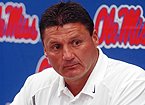
Recently my friend and I got into a discussion about college coaches and we soon realized how loaded the SEC is with quality coaches. Every coach in the league with the exception of the above pictured gentlemen have a pretty good track record when it comes to coaching em' up, either at their current school or somewhere in the recent past. Now to be fair, both Ed Orgeron and Sylvester Croom stepped into tough situations at their respective universities. And if you believe what you read, Orgeron is a great recruiter so maybe Ole Miss will rise up in the near future. Croom's teams have improved (at least in regard to point differential) every season so maybe the Bulldog faithful have hope too. However, since those two have the least impressive credentials, I'm leaving them out of the discussion. Below the other ten coaches in the SEC are listed alphabetically along with their resumes.

Rich Brooks
22 seasons
Record: 106-141-4 .430
Brooks’ winning percentage is not that good, but he has taken Oregon and Kentucky (two programs that were not exactly elite when he got there) to 5 combined bowl games, going 2-3. He also won a conference title at Oregon in 1994, the schools first conference title in 37 years.

Phillip Fulmer
14.5 seasons
Record: 137-41 .770
Fulmer has had only one losing season in his 14+ seasons in Knoxville. He has won a national title (1998) as well as two conference titles and 4 SEC Eastern Division titles. He has taken the Vols to 14 bowl games going 7-7.

Bobby Johnson
13 seasons
Record: 73-77 .487
Johnson has made the Vanderbilt program competitive. His teams were a combined 6-29 his first three seasons, but have made strides the past two seasons going 5-6 (narrowly missing out on a bowl) and 4-8. Two seasons ago they beat Tennessee for the first time since Reconstruction and this past year they upset Georgia in Athens. Johnson was 58-34 (.630) in 8 seasons at Furman. He won one conference title, made 4 playoff appearances, and participated in the national championship game in his final season (2001).

Urban Meyer
6 seasons
Record: 61-12 .836
Meyer just won the national championship at Florida in only his second year. His teams have never lost more than 3 games in any one season. He has taken his teams to 4 bowl games, never losing a single one. He has 3 conference titles and the first ever BCS bowl appearance by a program outside the BCS leagues.

Les Miles
6 seasons
Record: 50-25 .667
Miles spent 4 years at Oklahoma State rebuilding that program and just finished his second season at LSU maintaining that program’s status as one of college football’s elite. His only losing season was his first in Stillwater. His teams have gone to 5 bowl games, winning 3, and he has an SEC Western Division title.

Houston Nutt
14 seasons
Record: 102-67 .604
Nutt has taken the Razorbacks to 7 bowl games in 9 years, winning two of them, and also taking two SEC Western Division titles. Prior to coming to Fayetteville, he spent 4 seasons at Murray State amassing two playoff appearances. He also spent one year (1997) at Boise State, coaxing the Broncos to a 4-7 record in only their second year of play in Division IA.

Mark Richt
6 seasons
Record: 61-17 .782
Richt has never had a losing season at Georgia nor has he lost more than 4 games in any one season. The Dawgs have gone to 6 bowl games (4-2 record), and have 3 SEC Eastern Division tiles to go along with 2 wins in the SEC Championship Game.

Nick Saban
11 seasons
Record: 91-42-1 .683
Little Nicky has never had a losing season and has coached his teams 9 bowl games where they have posted a 4-5 record. He has 2 SEC Western Division titles and 2 wins in the SEC Championship game. He also won a MAC Championship in his only year at Toledo. Oh and he won it all in 2003.

Steve Spurrier
17 seasons
Record: 157-50 .756
Spurrier has had but one losing season in his career (his first year at Duke). He also won a conference championship at Duke to go along with the 6 he won at Florida. His teams have gone to 14 bowl games winning 8. He also won Florida’s first (and until this season only national title) in 1996.

Tommy Tuberville
12 seasons
Record: 96-49 .662
Tuberville has had just two losing seasons in his 12 years roaming the sidelines at Ole Miss and Auburn. His teams have participated in 8 bowl games, winning 5. He has 2 SEC Western Division titles and one win in the SEC Championship Game. He also had an undefeated season in 2004, but did not get to participate in the BCS title game (Orange Bowl) because there were 3 undefeateds that season. He’s 6-2 against archrival Alabama (including 5 straight wins). And his record since 2000 is 66-23 (.742).

Now, I'm leaving it up to you. Who is the SEC's best coach? Use any definition of coaching you want (getting the best out of what you have, best X's and O's guy, best winning percentage, most wins, best Under Armor commercials, etc.) and let me know how you would rank these 10 gentlemen.

Tuesday, January 09, 2007

Championship Game Fall-Out


Well, that went about as expected. Not even the most ardent UF supporter could have seen that coming. If you introduced one of your foreign friends to this game and told them before hand that one team had the Heisman winner, one of the nation's top defense, a very good big game coach, and an undefeated record while the other team had a somewhat shaky quarterback, an offense that couldn't generate much offense against good teams, a very good defense themselves, and a good record built up by several close wins here's guessing they would have thought Florida was the undefeated team and Chris Leak was the Heisman winner. Ohio State would have been the team with the shaky offense, and Troy Smith would have been, well Reggie Ball? Smith's final stat line read 4-14 for 35 yards and one pick. In backyard football, those numbers will only net you two first downs.

Sporting events like this are good because they let you know a few things. First, you can never know everything there is to know about football. Every day you learn just a bit more. Secondly, statsitcis can only tell you so much. Every stat in the book predicted an OSU win, if not a blowout. Yet, the Gators were the team that thoroughly dominated--and yes they dominated, the Buckeyes. They held OSU to 82 total yards and one offensive touchdown. This wasn't a New England Patriots/St. Louis Rams upset where the underdog held on for dear life to win down the stretch. No the Gators dominated from just after the opening kickoff. You would have made a ton of money laying 27 points for the Gators about 16 seconds into the game after Ted Ginn Jr. ran the opening kick back.

Why didn't we see this coming? Florida barely survived Vanderbilt and South Carolina, yet here they were marching up and down the field on Ohio State while stifling their vaunted offense. Everyone knew the Gators came in with a superb defense, but to suggest beforehand they would humble the Buckeyes in this manner was unimagineable. Was it the month Urban Meyer had to prepare that made the Gators so unstoppable? Was it Tressel's refusal to adjust his defensive strategy? The Buckeye defensive backs were hardly ever in the picture when Florida snapped the ball allowing countless short completion after short sompletion. Was it motivation? Did Ohio State get full of its own hubris? Were the Gators bristling from all the disrespect that they were unbeatable? Probably a combination of all these things and a few others. The important thing is that although this site is called Statistically Speaking, sometimes statistics just get it wrong. I saw the Gators as a flawed offensive team that squeaked by several mediocre at best foes. And the Gators may still yet have to pay the piper for all their close wins. I saw the Buckeyes as a great team that obliterated everyone in their path. Statistics aren't perfect, just a tool for making rational decisions. Picking Ohio State to win this game was a very rational decision, but as they say: That's why you play the game.

Monday, January 08, 2007

Fies--Err BCS Championship Game Preview


Record: 21-10

BCS Championship Game: Florida versus Ohio State

So after folks have had two months to talk themselves into a Gators upset, reality will set in about 9:25 EST tonight. Does Florida have a chance? Sure they do. I'd say probably 30-35%. But seriously, lets look at the facts. The Gators scored 17 against a South Carolina team that couldn't stop Houston. They scored 21 on Florida State. Wake Forest scored 30 against the Noles. Chris Leak will certainly throw at least two picks off his back foot, the game will be close at halftime, and the Buckeyes will roll in the second half.

Sunday, January 07, 2007

GMAC Bowl Preview


Record: 20-10


GMAC Bowl: Ohio versus Southern Miss

The GMAC Bowl will serve as a nice ending to a day filled with football. After two do-or-die NFL playoff games, fans can sit back and enjoy an exhibition. And if the game sucks, and you end up going to bed early? So what, you have work tomorrow.

The work that Frank Solich has done at Ohio in just his second season is outstanding. Though he has been overshadowed by Jim Grobe, Greg Schiano, and even Dick Tomey, its time to give the man his due. Unjustly fired from Nebraska three seasons ago, Solich could actually finish this season with a better record (10-4) than Bill Callahan (9-4). To do so, the Bobcats will have to defeat Conference USA runner-up Southern Miss.

In a flip-flop more egregious than those of John Kerry or even Jay Mariotti—here’s why Ohio doesn’t stand a chance. The Bobcats are 9-4, but they only do three things particularly well—return punts, cover them, and cover kickoffs (12th nationally in returns, 6th in covering punts, and 3rd in covering kickoffs). They are also 34th in kickoff returns which is good but not great. They averaged only 4.02 yards per rush and Ohio quarterbacks managed only 8 touchdown passes against 13 interceptions on the season. Defensively, opponents averaged 4.10 yards per rush against Ohio and threw 14 touchdown passes against 12 interceptions. Without those stellar special teams, Ohio probably wins 5 or 6 games.

Southern Miss is pretty good offensively (4.54 yards per rush to go along with 14 touchdown passes and just 6 interceptions) and defensively (4.01 yards allowed per rush with 13 touchdown passes allowed and 15 interceptions). The Eagles are average in covering punts (50th in the country) and pretty bad at covering kickoffs (117th). Similarly, they are average in returning punts (49th) and a touch worse at returning kickoffs (79th). Still, their advantage on offense and defense should provide them with a substantial edge.

Prediction: Ohio can only win this game if they return a considerable portion of the Golden Eagles punt and kickoffs back a long way, don’t commit any turnovers on offense, and get at least three for themselves from Southern Miss. Ohio has had a nice season, but will finish the year on a two-game losing streak.

Saturday, January 06, 2007

International Bowl Preview


Record: 20-9


International Bowl: Cincinnati versus Western Michigan

For those of you who don’t know, there are two more bowl games to be played before the BCS Championship Game on Monday night. On of them is Saturday at Noon in the International Bowl. If you’re a fan of the Broncos or Bearcats, or if you’re hankering for an upset check this one out.

The story of this game is the Western Michigan Broncos and their coach Bill Cubit, who has proven that he is no zirconium in his two seasons at the school. The Broncos were 1-10 in 2004, but Cubit has gone an outstanding 15-8 in his two plus seasons on the job. The Broncos win games with their passing attack and their defense. Senior quarterback Ryan Cubit completed over 62% of his passes and while throwing 15 touchdowns and 11 interceptions. Defensively the Broncos are led by Ameer Ismail and his 17 sacks which oh by the way led the nation. With Ismail, the Broncos were very stout on defense. They held opponents to only 2.49 yards per rush and also played effectively against the pass (12 touchdowns and 22 interceptions against).

The Bearcats were very average on offense, something that does not bode well when facing the defense of Western Michigan. They averaged only 3.36 yards per rush and threw the same number of interceptions (15) as touchdowns. Defensively, the Bearcats put up very similar numbers. Opponents averaged 3.69 yards per rush and threw 12 touchdown passes against 12 interceptions.

Cincinnati also went 1-4 away from home this season (though to be fair the 4 losses were to Ohio State, Virginia Tech, Louisville, and West Virginia). On the other hand, Western Michigan was able to go a respectable 3-4 on the road including winning at Virginia and playing Florida State down to the wire. So how is Cincy a 7 point favorite? Beats me. They have a new coach and seem to about even with Western Michigan when you adjust for the strength of their respective schedules. The only aspect of the game Western Michigan should be a little nervous about is punt coverage. The Broncos were 98th in the nation allowing 11.31 yards per return (and 3 touchdowns). However, Cincinnati was only 91st in the nation at returning kickoffs.

Prediction: The Broncos are about even with Cincinnati in terms of team strength plus they don’t have to deal with a new coach for the bowl game. Brian Kelly is a great hire for Cincy, but he will not win his debut.

Saturday, December 30, 2006

Bowl Nutshells

Since I'm off to sunny Miami and the Orange Bowl, the rest of the bowl previews will be abridged.

Record: 13-4


Meineke Car Care Bowl: Boston College versus Navy

Will be Boston College be motivated to play in another mid-level bowl game against another mid-level opponent sans coach Tom O’Brien? Can the Eagles shut down the Navy running attack? Navy quarterbacks threw for only a shade over 600 yards all season. If the Midshipmen are forced to throw the ball more than 11 or 12 times, they will probably be on the short end of things. Boston College was able to shut down the running game pretty effectively all season (3.19 yards per rush) so that trend should continue here. Keep an eye on the Eagles’ special teams—4th in the nation in kickoff return average and 14th in the nation in kickoff return defense.

Prediction: This game should be close (7 of BC’s games were decided by 7 points or less), but expect the superior size and athleticism of Boston College to be the difference.


Alamo Bowl: Iowa versus Texas

The Alamo Bowl matches up two teams looking to shake off some respective disappointments. Iowa was thought to be a preseason Big 10 sleeper, but they stumbled through a 2-6 conference season. Texas was in the national title race on Veteran’s Day, but two conference losses later, and they didn’t even get he chance to win the Big 12 title. Quarterback Colt McCoy gets the headlines for Texas and rightfully so, but the bigger story has been the play of the Texas defense. The run defense was great, limiting opponents to 2.32 yards per rush, but the pass defense was not nearly as strong (allowed 19 touchdown passes while intercepting only 12). Iowa counters with mediocrity across the board, especially at the quarterback position. Last season Drew Tate completed 62% of his passes with 22 touchdowns and only 7 interceptions. This season he completed a still good 59% of his passes, but threw just 16 touchdowns and 12 interceptions

Prediction: Texas is hardly the juggernaut they were last season—having been somewhat exposed in losses to Kansas State and Texas A&M (and the near loss to Nebraska). Iowa is a bad football team that benefited greatly from the NCAA’s 12th game. Away from home, the Hawkeyes beat Syracuse (4-8) and Illinois (2-10). Texas is in a different league than those two schools. The Longhorns remember the Alamo.


Chick-Fil-A Bowl: Georgia versus Virginia Tech

The Chick-Fil-A Bowl should be a defensive aficionado’s dream featuring the number one scoring defense in the nation (Virginia Tech) and the 22nd ranked scoring defense (Georgia). The Hokies have won their last 6 games and have allowed only 2 touchdowns in that span. They had to be carried by their defense because the running game was not strong this season (3.34 yards per rush). Georgia also comes in on a roll. After a 1-4 midseason stretch, the Bulldogs won their last two against Auburn (10-2) and Georgia Tech (9-4). Georgia’s main problem this season on offense was the play of their quarterbacks. Georgia quarterbacks combined to complete only 55% of their passes for just 11 touchdowns and 15 interceptions.

Prediction: The Hokie defense is a little bit stronger, and their quarterback play is a little bit better. The Hokies win what should be a very close game.


MPC Computers Bowl: Miami versus Nevada

Don’t be surprised of Miami finishes with a 6-7 record. The Wolfpack are a pretty good team. They do a lot of things well. Their senior quarterback Jeff Rowe completed nearly 65% of his passes and threw 16 touchdowns and just 7 interceptions. Their defense intercepted 19 passes on the year while allowing only 13 touchdown passes. They are 9th in the nation in average per punt return and 15th in the nation in average per kickoff return. On the other sideline, Miami does one thing well—play defense. They average only 3.70 yards per rush and threw just 14 touchdown passes all year. They broke 20 points in 5 games (Florida A&M, North Carolina, Florida International, Duke, and Georgia Tech). 4 of those teams are not known for their stout defenses. The Hurricanes did hold opponents to 2.24 yards per rush and allowed only 8 touchdown passes all year.

Prediction: To win this game, the Hurricanes will have to hold Nevada to under 17 points because their offense will not score more than that. With Nevada’s experienced offense and solid special teams, I don’t believe the ‘Canes can do that. Miami heads into the off season with a 6-7 record.


Outback Bowl: Penn State versus Tennessee

Both of these proud programs have not participated in bowls in the same season since 2002. Pretty amazing. Tennessee saw their offense (at least the passing game) take a dramatic step up from a disappointing 2005. Erik Ainge went from completing less than half his passes with 5 touchdowns and 7 interceptions last season to completing over two-thirds of his passes with 19 touchdowns and just 8 interceptions. The Nittany Lions are making consecutive bowl appearances for the first time since 1999. They were led by their fantastic defense. Opponents averaged only 2.80 yards per rush and managed only 10 touchdown passes while throwing 12 interceptions. They had to be strong to compensate for an offense that was not nearly as strong as it was last season. Keep an eye on Tennessee’s atrocious kickoff return game (118th in the country—next to last in average kickoff return).

Prediction: Joe Pa’s boys simply do not have enough offense to keep up with the Vols. This game should be close until the fourth when the Vols will go up by two scores—an insurmountable margin for the Penn State offense.


Cotton Bowl: Auburn versus Nebraska

Auburn went 10-2 in the regular season, but they failed to win the SEC West because of Brandon Cox’s play at the quarterback position. A year after throwing 15 touchdowns and just 8 interceptions as a sophomore, Cox slumped somewhat in 2006. He threw just 13 touchdown passes and 9 interceptions—still solid numbers, but not the progression most Auburn fans and coaches were expecting. The Cornhuskers had a successful 9-4 season because of the play of their quarterback Zac Taylor. The senior, under the tutelage of Bill Callahan, helped make Nebraska a dominant passing team. He threw 25 touchdowns and just 7 interceptions while guiding the Huskers explosive offense.

Prediction: The Huskers offense was shut down in only two games all year—Southern Cal and Oklahoma. Auburn has a pretty good defense, but it is not in that league. Nebraska sends Auburn to their second straight bowl loss.


Gator Bowl: Georgia Tech versus West Virginia

On Thanksgiving, Georgia Tech was 9-2 with losses to Notre Dame and Clemson, and looked poised to end their string of 5 loss seasons. Two terrible performances by Reggie Ball, and two close losses and the Jackets look poised to lose 5 games yet again. Reggie Ball won’t be playing, so maybe that favors the Yellow Jackets. Defensively, the Jackets were very good against the run (allowed 2.88 yards per rush) and they will need to bring their A game to slow down the West Virginia running game. The Mountaineers averaged 6.66 yards per rush and scored 45 touchdowns on the ground. They were held below 4 yards per rush in only two games (East Carolina and South Florida). Defensively, West Virginia played pretty well against the run (2.81 yards per rush allowed) and pass (15 interceptions and 14 touchdown passes allowed), except in the Louisville game where they allowed 44 points and had a touch of fumble-itis.

Prediction: Unless the Mountaineers commit a ton of turnovers, they should win the Gator Bowl rather easily. Georgia Tech will lose 5 games yet again.


Capital One Bowl: Arkansas versus Wisconsin

Wisconsin may be one of the most lightly regarded BCS 1-loss teams of recent memory. The Badgers did play a relatively soft schedule, but they won all their games save for the roadie at Michigan. The Badgers are pretty good against the run (allowing only 3.56 yards per rush), but they are superb against the pass (only 6 touchdown passes allowed all year). Fortunately for Arkansas, their offense is predicated on the run, led by stud back Darren McFadden. The Hogs averaged 5.88 yards per rush while gaining nearly 3000 yards on the year. Until the last 2 games they were also pretty solid throwing the ball too. They finished the year with a respectable touchdown to interception ratio of 23:16. The only downside to the passing attack was its inconsistency (51% completion percentage).

Prediction: Wisconsin’s defense is strong enough to force Arkansas into more than a few 3rd downs where they are forced to pass. That will be the Hogs undoing and they will finish the year on a 3-game skid.


Rose Bowl: Michigan versus Southern Cal

The Rose Bowl should certainly live up to the hype that has been generated. Both teams have stout defenses. Michigan is unbelievable against the run, holding opponents to 1.86 yards per rush, although they were gouged in the finale against Ohio State (allowed 6.45 yards per carry). Against the pass, they were mortal though, allowing 15 touchdowns while intercepting 12 passes. The Trojans were not as strong as the Wolverines against the run (allowing 3.15 yards per rush), but are a little better against the pass (11 touchdown passes allowed and 10 interceptions).

Prediction: The difference in this game will be the Trojans offense. The Trojans may not be able to run the ball against Michigan, but they should be able to throw on the Wolverines. The Trojans win a classic in the Rose Bowl.


Fiesta Bowl: Boise State versus Oklahoma

Cinderella comes to the ball. The most interesting aspect of this game for me will be whether Ian Johnson (6.38 yards per rush and 24 touchdowns) will be able to run against the Oklahoma defense (3.29 yards allowed per rush). Also, don’t overlook the Boise State defense. The Broncos allowed 3.05 yards per rush and intercepted 17 passes while allowing 15 scores through the air. Keep an eye on Oklahoma kicker Garrett Hartley. He has made 17 of 18 field goals on the year and could be the difference in a close game.

Prediction: As long as Jared Zabransky does not play like he did against Georgia on Labor Day Weekend 2005, the Broncos will be in this game. Oklahoma is not the juggernaut they have been in past years, but they will do just enough to get by Boise.


Orange Bowl: Louisville versus Wake Forest

Wake Forest has had a nice season and is pretty strong defensively. They allowed only 3.10 yards per rush and picked off twice as many passes (22) as they allowed through the air (11). Still the Deacons have not faced an offense as talented as Louisville all season. The Deacons were also aided by an exemplary 5-0 record in close games.

Prediction: Unfortunately, midnight will come for the Demon Deacons on January 2nd. As long as they are careful with the football, the Deacons should be in the game, but they do not have the offensive firepower to win this game.


Sugar Bowl: LSU versus Notre Dame

This sure looks a lot like last year’s Fiesta Bowl when an undeserving Notre Dame team went up against the best 2-loss team in the nation. Losing your last game by 20 points and then just strolling on into the BCS just doesn’t seem right. Here’s all you need to know about Notre Dame’s porous and poor defense: Opponents threw 22 touchdown passes and just 10 interceptions against them.

Prediction: Perhaps I’m a bit biased, but this game just seems like a total mismatch. Both teams have stellar offenses, but Notre Dame’s defense just isn’t good and LSU’s is elite. LSU in a rout.

Friday, December 29, 2006

Bowl Preview: Five for Friday

Record: 11-1


Music City Bowl: Clemson versus Kentucky

The Clemson Tigers look to end their season on a positive note. In late October, the Tigers stood 7-1 and appeared to be the class of the ACC. Looking ahead they had three of their final four games at home and seemed to have the inside track to an ACC Championship. Three losses later, the Tigers are once again bound for a mid-level bowl against a mid-level opponent.

The Tigers strength is their running game. The Tigers rushed for over 2700 yards and averaged 5.75 yards per attempt while scoring 31 touchdowns. The dynamic duo of James Davis and C.J. Spiller power the Tigers ground attack. Don’t look now though, but James Davis has struggled of late. In the Tigers last season swoon Davis has rushed for only 173 yards on 56 carries (3.09 average per rush). If Tommy Bowden has any coaching acumen he will use Spiller as the primary runner against the porous Kentucky defense.

Clemson’s defense was very good this season. Their run defense was exceptionally strong holding opponents to under 3 yards per rush (2.93). The pass defense was also very good. Opponents completed only 54% of their passes for an average of only 5.62 yards per attempt. Opposing quarterbacks also threw only 6 touchdowns all season and 14 interceptions. With such great numbers how did the Tigers lose 4 games? Special teams and quarterbacks. The Tigers were 114th in the nation in kickoff return defense. They allow over 24 yards per return, and this facet of the game is almost the sole reason they lost to Boston College. While quarterback Will Proctor had very solid full season stats, either he was playing well over his head, or coaches have spotted something on film because he has not been the same player as of late. He has thrown just 6 touchdowns and 8 interceptions in the Tigers last 7 games. Remove the beatdown of Temple, and the touchdown number drops to 4.

The Kentucky Wildcats enjoyed a solid season, finishing 4-4 in SEC play, a full game ahead of the Gamecocks. The Wildcats were led by their passing game. Junior quarterback Andre Woodson completed 62% of his passes while averaging 8.23 yards per attempt. He also amassed 28 touchdown passes and just 7 interceptions. It’s a good thing too because the Kentucky running game was pretty awful. The ‘Cats averaged just 3.19 yards per rush on the season. Only against Texas State and Tennessee did the ‘Cats break 4 yards per carry.

Defensively, Kentucky is dreadful. They gave up over 5 yards per rush and gave up 21 touchdown passes while grabbing only 13 interceptions. Clemson should be able to move the ball at will against the Kentucky defense. Kentucky does have very good special teams that may allow them to hang in the game with the Tigers. They are first in the country average yardage per punt return. They are 10th in the nation in average yardage per kickoff return. They also cover kicks very well—7th in average punt return yardage against and 24th in average kickoff return yardage against.

Prediction: The only chance Kentucky has to win this game is to make several big plays in their kickoff and punt return games. I expect them to have one or two good returns, but with the way their defense will likely play it may take 4 or 5 returns. Kentucky will keep this game close for awhile, but will not be able to consistently stop the Tigers running attack.


Sun Bowl: Missouri versus Oregon State

The Beavers have come a long way since losing by 28 at Boise State in late September. They have won 7 of 8 including a home upset of Southern Cal and a very good road win at Hawaii. The Beavers have an offense that is very workmanlike. The Beavers average only 3.49 yards per rush and have only 16 touchdown passes all year. They are safe with the ball though, having thrown only 8 interceptions all season. Like Kansas State, the Beavers win games with their outstanding return game. The Beavers are 7th in the nation in punt return average. They have run 3 kicks back for scores and average 14.69 yards per attempt. They are 27th in the nation in kickoff return average. Special teams put their less than special offense in good field position.

The Beavers do have a pretty strong defense. They held opponents to only 3.26 yards per rush, and if we remove the debacle against Boise State, that number drops to 2.81 per rush. The Beavers were also dam good against the pass too. Opponents completed only 54% of their passes while throwing 14 touchdowns and 17 interceptions. The one area where Oregon State is very weak is covering punts. They are 105th in the country, allowing 11.84 yards per punt return.

Missouri lost one of the best players in the programs history, Brad Smith, and actually had a better season. The season ended on a somewhat sour note as the Tigers lost 3 of 4 including one to previously winless (in the Big 12) Iowa State. Missouri is led by their outstanding quarterback Chase Daniel. Daniel completed 64% of his passes for 26 touchdowns and only 10 interceptions. Daniel also proved himself to be a capable runner, accumulating nearly 400 yards on the ground and 4 touchdowns.

Defensively, Missouri is solid. They allow only 3.78 yards per rush. Opponents passed for only 15 touchdowns on the year and the Tigers grabbed 12 interceptions. No one will confuse them with Ohio State, but they are a solid unit.

Prediction: The key to this game will be 3rd downs. The Tigers were 8th in the nation in converting 3rd downs. They converted 49.2% of 3rd downs primarily because they put themselves in good position by being efficient on first and second down. If the Beavers are able to get off the field on 3rd down they will win. This game should an entertaining low-scoring affair because the Beavers have a good defense to counter Missouri’s superior offense, but are not explosive enough on offense to take advantage of Missouri’s average defense. The Beavers will make a few plays in the return game to enable them to take the Sun Bowl.


Liberty Bowl: Houston versus South Carolina

Don’t count the Cougars out just because they are taking on the Ol’ Ball Coach. The Cougars have an offense Steve Spurrier would be proud of. They average 4.86 yards per rush and have 27 touchdowns on the ground, but the real story is their passing attack. Quarterback Kevin Kolb completed over 67% of his passes while averaging 8.71 yards per attempt. However, the most amazing statistic is that he threw 27 touchdowns and just 3 interceptions on the season. He also did not have a game where his quarterback rating was below 100.

Defensively, the Cocks should be able to take advantage of the Cougars average defense. The Cougars allow 4.15 yards per rush (solid, but nor great) and have given up 17 touchdown passes while grabbing only 11 interceptions. On defense, the Cougars do not cover punts well (97th nationally in average yards allowed per return), but they do cover kickoffs very well (9th nationally in average yards allowed per return).

Spurrier’s second team at South Carolina was somewhat of a disappointment in conference play (only 3-5), and they did lose 3 of their last 5. However, all three losses were close (by a combined 14 points) and they were all to good teams (Tennessee was the worst of the bunch at 9-3) and they did beat Clemson to end the season. South Carolina runs the ball well (averaging 4.52 yards per rush) and their passing attack has improved as the season has progressed (despite the 3 picks in the Clemson game).

Defensively, the Cocks are pretty good against the run (allowing 4.07 yards per rush). They were even better against the pass, holding opponents to a 52% completion rate while allowing only 10 touchdown passes all year. On special teams, the Cocks are not exceptional either way except in covering punts where they are exceptionally bad. They rank 111th in the nation allowing 13.54 yards per rush.

Prediction: South Carolina should win, but don’t be surprised if Houston gives South Carolina a problem. The Cougars have a very good offense and should be able to hang in there for 4 quarters,


Insight Bowl: Minnesota versus Texas Tech

The Red Raiders do what the always do. They threw a lot of passes (3 times as often as they ran) and threw them well (nearly 67% completion rate, 37 touchdowns, and just 10 interceptions). They were decent on defense, but really in Lubbock, defense is just a time for the offense to catch its collective breath. The Red Raiders did their best to allow the offense the real estate to compile a ton of yardage. They averaged only 16.59 yards per kickoff return (117th in the nation). Amazingly, opposing kickers made 17 of their 18 field goal attempts.

The Gophers also did what they always do—run the football. They accumulated over 1800 yards on the ground and averaged 4.3 yards per rush. They also passed the ball well. Senior Bryan Cupito completed nearly 60% of his passes for 19 touchdowns and just 8 interceptions. Defensively, the Gophers allowed 4.24 yards per rush and were able to grab 16 interceptions. However, they also allowed 22 touchdown passes.

Prediction: The Gophers and Red Raiders seem to be about even, but the Red Raiders have a better record because of the Gophers arduous schedule. Not that Texas Tech play cupcakes, but the Gophers losses came to Ohio State (12-0), Michigan (11-1), Wisconsin (11-1), Cal (9-3), Penn State (8-4)—in a game where they wuz robbed, and Purdue (8-5). The only loss to be somewhat ashamed of was to Purdue. The Gophers never quit either. They stood 3-6 at the beginning of November, but rebounded to win 3 in a row against other teams competing for bowl bids (Indiana and Iowa) and a team that admittedly had probably quit (Michigan State). The Gophers are pretty big dogs, but they will upset the Red Raiders.


Champs Sports Bowl: Maryland versus Purdue

The Maryland Terrapins are an enigma. They do not run the ball particularly well, averaging 3.71 yards per attempt. Their passing game is not extremely powerful, with just 14 touchdown passes and 12 interceptions on the year. Opponents averaged 4.68 yards per rush and opposing quarterbacks have nearly doubled up their interceptions (7) with 13 touchdowns. The Terps were not particularly effective covering punts (113th in the nation in average punt returns allowed) or kickoffs (68th in the nation). They are also pretty mediocre at returning punts (56th in the nation in punt return average). They do return kickoffs well (18th in the country in average per return). However, the Terps are simply very lucky. They were an amazing 6-1 in close games, something that does not portend good things for the future.

On the other sideline, Purdue loves to throw the ball around. They haven’t done it quite as well this year as they have in the past (23 touchdown passes but 19 interceptions). The Boilers actually ran the ball pretty well too—over 1700 yards with a 4.44 average per attempt. Joe Tiller was not able to craft a very good defense. The Boilers gave up over 5 yards per rush (5.02) and allowed opponents to toss 18 touchdowns while intercepting just 11 passes. The Boilers do cover kickoffs very well. They are 3rd in the nation allowing only 15.06 yards per kickoff return.

Prediction: Despite their 8-4 record, Maryland is simply not that good. Purdue will not conjure up visions of 1995 Nebraska either, but they should eke out a win over the Terps. They been dancing for quite a while with their luck in close games, so its time to pay the piper.

Thursday, December 28, 2006

Bowl Preview: Independence, Holiday, and Texas

Record: 8-1


Independence Bowl: Alabama versus Oklahoma State

Rumor has it Alabama will be using the latest technological advances in genetics and cloning to create an amalgamation of Bear Bryant, Amos Alonzo Stagg, and Bud Wilkinson to coach the team next season. Using the latest advances in time travel, I can tell you that Alabama will fire Bear Alonzo Wilkinson at the conclusion of his fourth season. All kidding aside, the Independence Bowl should be an entertaining bout between two teams that could not be more different.

The Crimson Tide are led by their defense. While not at the elite level it attained last season, the defense is still quite good. The Tide were pretty good against the run, holding opponents to 3.84 yards per rush. The Tide were gouged on the ground by LSU, Arkansas, and Duke?!, but held their own in the other 7 games. The Tide pass defense was probably the team’s strong suit. Only two quarterbacks (Chris Leak and JaMarcus Russell) had good games against their pass defense. Collectively, opponents completed 56% of their passes for an average of 6.77 per attempt with 14 touchdowns and 15 interceptions. If we remove those two stars from the equation, those numbers fall to 53%, 6.31 per attempt, 9 touchdowns, and 15 interceptions.

Offensively, Alabama is solid, but hardly spectacular. Their running game is rather ho-hum. Collectively, Tide rushers averaged only 3.54 yards per carry, and the team scored only 8 rushing touchdowns. The Tide passing attack was the offenses strength. Quarterback John Parker Wilson will not be confused with Colt Brennan or Brady Quinn, but he protected the ball well (only 9 interceptions) while throwing 16 touchdowns.

On the other sideline, the Cowboys rebounded nicely from a forgettable 2005 season. After averaging only 20.2 points per game last season, their offense dramatically improved, increasing their average to 35.3 per game. The Cowboys improved from 4-7 (1-7 in Big 12 play) to 6-6 (3-5 in Big 12 play). The Cowboys were also much better than their record as they were an unlucky 0-4 in close games. Oklahoma State is strong in both the running game and passing games, at least on offense. They averaged 5.19 yards per rush and had 25 touchdowns on the ground. Through the air, the Cowboys love to bomb away. Quarterbacks completed only 55% of their passes, but those passes traveled an average of 8.29 yards meaning there were a lot of throws down the field. There were also 26 touchdowns and just 10 interceptions. Quarterback Bobby Reid not only throws a good deep ball, but he is also a dual-threat as a runner (over 450 yards and 5 touchdowns). Also keep a look out for receiver Adarius Bowman. He had only two games over 100 yards, but one of them was a 13 catch 300 yard day against Kansas.

The reason the Cowboys were 6-6, and part of the reason they lost so many close games, is because they are very weak in the two other aspects of football: defense and special teams. The Cowboys did a decent job stopping the run, allowing only 4.10 yards per rush. However, the Cowboys allowed opposing quarterbacks to complete over 61% of their passes and throw for 19 touchdowns. The Cowboys also intercepted only 9 passes on the year. And special teams? The Cowboys are awful covering both punts (102nd nationally) and kickoffs (91st) in terms of average yardage allowed per return. To be fair, the Cowboys do return both punts (17th nationally) and kickoffs (8th) very well.

Prediction: Despite the fact that Oklahoma State is about as close to a one-trick pony as you will find in this year’s postseason, their offense will simply overwhelm Alabama. Expect some real fireworks for both sides on special teams’ returns in this game.


Holiday Bowl: California versus Texas A&M

For the fifth straight year, Cal has won at least 7 games and for the fourth straight season, Cal is in a bowl game. Not bad for a team that was 1-10 the year before Jeff Tedford arrived. Don’t worry Cal fans, the Pac 10 title will come, but for now The Bears must concentrate on playing better in the Holiday Bowl than they did two years ago when they were spanked by an underdog from Texas.

As is usually the case under Jeff Tedford, Cal is very efficient on offense. Their running game averages over 4.7 yards per rush and their passing attack has accumulated 24 touchdowns against just 13 interceptions all year. Cal is also fairly strong on defense, at least more so than they are given credit for. They stop the run reasonably well (3.7 yards per rush) and opponents have thrown more interceptions (20) against them than touchdowns (16).

The Golden Bears also usually have good field position after their defense makes opponents punt. The Bears are fourth in the NCAA averaging 17.26 yards per return. Wide receiver DeSean Jackson has taken four kicks back to the house and is reason enough to not slip off to the fridge when the Aggies are punting.

Speaking of the Aggies, Dennis Franchione may have saved his job, at least until he loses to Texas again, after going 9-3. 8 of their 12 games were decided by 6 points or less. The Aggies went 5-3 in those games, so they were good, but hardly incredibly lucky. On offense, the Aggies run the football (5 yards per rush and 32 touchdowns) and are safe with the football when they throw it (only 3 interceptions all season). Sophomore quarterback Stephen McGee threw 11 of the teams 12 touchdown passes while adding over 600 yards and 4 touchdowns on the ground.

On defense, the Aggies were solid, but not particularly stout. Opponents averaged 4 yards per rush, but the good running teams (Oklahoma State and Oklahoma) were able to run the ball effectively. The Aggies were only able to grab 10 interceptions (and 4 of those came in the finale against Texas) on the year while allowing 13 touchdown passes.

Texas A&M is a solid team with a very small margin for error as evidence by the plethora of close games they played. They needed every small advantage they could get, and they were able to generate that advantage in the area of kickoff returns. The Aggies ranked second in the league in average kickoff return (27.57 per return) enabling them to begin drives with very good field position. That should help the Aggies hand with a Cal team that is simply better. However, the Aggies do have one glaring weakness on special teams—punt coverage. The Aggies finished 81st nationally in average yards allowed per punt return. If your memories short, the Bears brought 4 punts back for scores. Draw your own conclusions.

Prediction: The Aggies have played their fair share of close games, so don’t be surprised if this one goes down to the wire. Still, the Aggies advantage on kickoff returns should be neutralized by the Bears advantage on punt returns. The Bears offense is more prolific and their defense is stronger, so they will win.


Texas Bowl: Kansas State versus Rutgers

The Texas Bowl offers viewers with the NFL Network an intriguing look at two teams with similar pasts. Roughly 15 years ago, Kansas State was in Rutgers’ position—a completely worthless program that was being rebuilt and rejuvenated by an excellent coach. In the years since their rise, the Wildcats have competed for both conference and national titles before falling back on hard times. The Scarlet Knights would like to emulate most of what the Kansas State program has accomplished (sans the falling on hard times) and they can get a good start by winning their first ever bowl game.

The Scarlet Knights are powered by their running game and stellar defense. Sophomore Ray Rice went over 200 yards thrice on his way to a 1600 yard season. He also accounted for 19 touchdowns while averaging 5.22 yards per rush. The Knights will need Rice to perform well on first and second down so they can avoid putting quarterback Mike Teel in too many 3rd and longs. Teel completed only 55% of his passes and threw more interceptions (10) than touchdowns (13).

Defensively, the Knights are phenomenal. They are giving up only an eyelash over 3 yards per rush (3.01). They are also allowing quarterbacks to complete only 52% of their passes, 13 of which have been intercepted while allowing only 8 touchdowns through the air. The Knights also hope to use their solid punt return game to change field position. While the Knights rank only 49th in average per return, they have returned two punts for scores.

Glossing over the Wildcats team statistics, they hardly have the look of a 7-5 team. Their running game has been solid, averaging a respectable 4.18 yards per carry. However, whenever the Wildcats are forced to throw the football, well suffice it to say they may be better off punting on 3rd and long. Kansas State quarterbacks have completed only 52% of their throws and only 10 of those have gone for touchdowns against 18 interceptions. On the other side of the ball, Kansas State does a pretty good job of stopping the run holding opponents to under 4 yards per rush (3.95). Opponents have passed the ball pretty well against the Kansas State defense tossing 16 touchdowns and just 10 interceptions on the year while completing over 58% of their passes. So how has Kansas State won 7 games? Special teams.

The Wildcats are 32nd in the country in punt return average (11.18 per return and two scores) and they are even better at kickoff returns where they rank first in the country (27.94 per return and three scores). The Wildcats are also 11th in the country at covering kickoffs allowing only 17.31 yards per return. The Wildcats are only 64th in the country at covering punts, but to paraphrase Meatloaf, three out of four ain’t bad.

Prediction: Reasons to believe Kansas State can upset Rutgers? Motivation: Rutgers was a few plays away from playing in the Orange Bowl and are now exiled to play in a bowl game most of the country couldn’t watch if it wanted to. Special Teams: The Wildcats are great at returning both punts and kickoffs while the Knights are poor a kickoffs (93rd in the nation) and even worse at covering punts (100th in the nation). Reasons to believe Rutgers wins their first bowl game? Manhattan: Kansas State won only one game away from the Little Apple. Offense: Rutgers is better. Defense: Rutgers is better. It’s so simple when you break it down like that. Rutgers may give up some big plays on special teams, but they are stronger than Kansas State on offense and defense, so they should eventually cover the 7 to 7.5 point spread.

Tuesday, December 26, 2006

Bowl Preview: Motor City and Emerald


Record: 7-0


Motor City Bowl: Central Michigan versus Middle Tennessee State

The Chippewas return to the scene of their victory in the MAC Championship to take on a Middle Tennessee State team participating in its first ever bowl game. The Chips are led by their stud freshman quarterback Dan LeFevour. He completed nearly 64% of his passes and tossed 25 touchdowns and just 10 interceptions while directing an offense that broke 30 points 7 times in their last 9 games. LeFevour is also a pretty good runner, accumulating over 400 yards and 6 scores on the ground. The Central Michigan ground attack is paced by sophomore sunning back Ontario Sneed. He contributed over 700 yards on the ground and averaged a robust 5.8 yards per rush.

Defensively, the Chips are pretty good against the run (allowing 3.6 yards per rush), but can be beaten through the air. Opponents completed nearly 62% of their passes while throwing 23 touchdowns and 14 interceptions against Central Michigan. Most revealing is the fact that Central Michigan allowed moribund Temple to have a field day through the air. The 1-11 Owls, who threw just 13 touchdown passes all season, managed 4 against the Chips defense in a fairly close 42-26 loss.

Fortunately, for Central Michigan, the Blue Raiders are not a very good passing team. They have only 9 touchdown passes on the year (against just 9 interceptions). The Blue Raiders prefer to run the ball, amassing 22 scores on the ground, but averaging a poor 3.7 yards per rush. Middle Tennessee’s running attack is very schizophrenic. They managed only 77 yards on 39 carries in a 21-20 loss to Troy and just 92 yards on 35 rushes in a 7-6 win over Florida International, but bludgeoned four Sun Belt teams (Florida Atlantic, Arkansas State, Louisiana-Monroe, and North Texas) for over 200 yards on the ground.

Defensively, Middle Tennessee State is pretty strong against the run allowing only 3.5 yards per rush. For a Sun Belt team, they are also decent against the pass, holding opponents to a 57% completion rate while allowing only 17 touchdown passes and intercepting 14 of their own. Middle Tennessee is also very strong in the kickoff return game. They are 14th in the nation averaging 23.81 yards for return, and taking 2 kicks all the way back for scores. Middle Tennessee does not have the passing attack to keep up with the powerful Central Michigan offense. To win they must have one of the better performances from their schizo running game and also get good returns on kickoffs when the Chips score.

Prediction: The only reason to expect Central Michigan not to walk over the Blue Raiders is motivation. Their coach, Brian Kelly, has already accepted the head job at Cincinnati. Will the Chips come out flat and allow the Blue Raiders to hang around? No way. Central Michigan hung with Boston College and Kentucky, Middle Tennessee was blown away by Oklahoma, Louisville, and South Carolina. The Chips improve to 10-4 and even the MAC’s record at 1-1 in bowl games this season.


Emerald Bowl: Florida State versus UCLA

Could two teams with such similar records possibly be in more different states of mind? The Bruins come in riding high having won three in a row including a huge upset over rival Southern Cal that kept them out of the national championship game. Florida State comes limping in with its worst team in a generation. The ‘Noles are 6-6 and have lost 4 of their past 6 including a home beat down at the hands of Wake Forest. The running game, or lack thereof gets most of the press for Florida State’s bad season, and rightfully so with a 3.45 average per rush, but the passing attack is pretty culpable too. Drew Weatherford and Xavier Lee have combined to complete about 55% of their passes while throwing just 18 touchdowns and 15 interceptions. If we remove the games against Troy, Rice, and Duke those numbers drop to 52%, 9 touchdowns, and 11 interceptions.

On the defensive side of the ball, the ‘Noles are quite strong against the run. Opponents averaged only 2.61 yards per attempt. Only two teams, Clemson and North Carolina State, were able to average more than 4 yards per carry against the FSU defense. The ‘Noles are decent against the pass, but are far from the dynamo they have been in recent years. The defense only grabbed 10 interceptions while giving up 15 touchdown passes on the year.

Last season, UCLA was an unbalanced and fraudulent 10-2 team that was carried by their prolific offense and some great luck in close games. This season, the Bruins are a better than their record 7-5 team with a pretty good defense and a below average offense. After averaging 4.4 yards per rush in 2005, UCLA has dropped to 3.7 per carry this season. That means more 2nd and 3rd and longs. After having completed 63% of their passes with 34 touchdowns and only 6 interceptions in 2005, the Bruins have managed only 14 touchdown passes against 12 interceptions while completing 57% of their passes. Patrick Cowan has not come close to duplicating the success Drew Olson enjoyed last season, but he has improved as the season has progressed. In the past 3 games (all wins), he has not thrown an interception.

Last season, UCLA’s run defense (if you can call it that) ‘held’ opponents to 5.37 yards per rush. This season, they have nearly cut that number in half. They are allowing a scant 2.77 yards per carry. Last season the Bruins allowed opponents to complete 59% of their passes and throw 19 touchdowns while only intercepting 8 themselves. This season, opponents are completing 57% of their passes with 17 touchdowns, but they have also thrown 12 interceptions. In the last 3 games, UCLA’s defense has been especially strong. The Bruins have allowed 255 yards rushing on 100 opponent attempts (2.55 per rush), only 52% completion rate, and no touchdown passes while intercepting 2. These good games have come against three pretty good offensive teams (Oregon State, Arizona State, and Southern Cal).

Prediction: This game should be a defensive showcase. Neither team will be able to run the ball, but UCLA will make fewer mistakes and cause Bobby Bowden to have his first losing season since 1976.

Saturday, December 23, 2006

Bowl Preview: Christmas in Hawaii


Record: 3-0


Hawaii Bowl: Arizona State versus Hawaii

Twas the night before Christmas and far far away
The Warriors and Sun Devils a game they would play
After snoozing last season the Warriors awoke with a jolt
To win 10 games with a QB named Colt
His passing is awesome and his running is sound
53 through the air and 5 on the ground
The defensive coach while in Dixie left tickets for The King
And on the islands has concocted a marvelous thing
The defense, once putrid, is only slightly below par
That plus the offense has taken them far
The Sun Devils come in just seeing red
With visions of Erickson (and violations) dancing in their head
The lame duck man, Koetter, is an offensive guru
But too often his defense has played like poo poo
Koetter constantly failed to impress his bosses
Because he finished only one season with less than 5 losses
A loss here would be such a bummer
As they hope to recapture the glory days of Snyder and Plummer

Prediction:
The Warriors are good with just 3 losses all year
Certainly they’ll get win 11 here
When June Jones gets the Gatorade bath he will recite
Merry Christmas to all, Aloha, good night

Friday, December 22, 2006

Bowl Preview: Pizza, New Mexico, and Armed Forces

Record: 2-0


PapaJohns.com Bowl: East Carolina versus South Florida

The South Florida Golden Bulls are making their second straight bowl appearance and second in the program’s history. The Bulls are led by their fabulous freshman quarterback Matt Grothe. He is a very accomplished passer for a freshman, completing nearly 64% of his passes while averaging over 8 yards per pass. His touchdown to interception ratio is fairly mediocre (14 touchdowns and 14 interceptions), but Grothe has accounted for 9 scores and over 600 yards in the ground, making him a duel threat. He is actually the Bulls leading rusher to boot. The South Florida running game is not terribly strong, relying on a committee approach consisting primarily of Benjamin Williams and Ricky Ponton who have combined for over 600 yards and a per carry average of just over 3.8.

South Florida’s primary strength is their fast, athletic defense. They held opponents to 3.4 yards per rush, including an impressive finale where they held the vaunted West Virginia attack to just 132 yards and under 3.6 yards per carry. That represented the lowest yardage output and per carry average for West Virginia all season. They also perform very well against the pass limiting opponents to only 10 touchdown throws on the year while grabbing 15 interceptions.

Offensively and defensively South Florida is a formidable squad, but in the third area of football, they are lacking. Their place kicking duo of Delbert Alvarado and Mike Benzer has combined to make just 6 of 14 field goals on the season. Benzer is 2 for 6 and has not played since the 7th game against North Carolina. Alvarado is not much better, but he has hit half his kicks (4 for 8). South Florida is also poor covering punts. They allow 13.9 yards per return (114th in the nation) and have given up two returns for scores. The one thing the Bulls are proficient at on special teams is returning punts themselves. They average 12.9 yards per return (19th in the nation).

East Carolina is making their first bowl appearance since 2001. In just his second season, head coach Skip Holtz has proven he has a little bit of his pops ability to turn around downtrodden programs (the Pirates were 1-11 in 2003). The Pirates don’t do any one thing particularly well, and they are not particularly poor in any area either (except one—more on that later). On offense they average 3.5 yards per rush and have thrown one more touchdown pass (12) than interceptions (11). On defense, they give up 4 yards per carry and have picked off 16 passes and allowed 16 touchdowns through the air.

Can East Carolina take advantage of South Florida’s one glaring weakness—punt return defense? East Carolina is 70th in the country in punt return average (7.9 per return), and have not brought one back for a score. Conversely, the one area where East Carolina is weak (as opposed to average) is punt return defense. They are only slightly better than South Florida (103rd nationally), giving up 11.8 yards per return.

Prediction: East Carolina’s punt return game is nothing special so they should not be able to take advantage of the one weakness South Florida has. South Florida is statistically better in every other area than East Carolina, and obtained this better ranking while playing in a stronger league. South Florida wins rather handily.


New Mexico Bowl: New Mexico versus San Jose State

New Mexico playing in the New Mexico Bowl? Wonders never cease. Unfortunately for Wyoming (a team that finished ahead of New Mexico in the Mountain West and beat them head to head), there is no Wyoming Bowl, so the pokes are home for the holidays.

Los Lobos do not run the ball particularly well (averaging only 3.3 yards per rush), but they do throw La Bamba. The Lobos average 13.48 yards per completion (15th in the nation) and their quarterbacks have completed only 52% of their passes (signs of an offense that throws the ball down the field). The Lobos offense has been led by two men—senior quarterback Chris Nelson and freshman Donovan Porterie. Nelson has played the most (and most recent). He has completed exactly half his passes while throwing 11 touchdowns and 6 interceptions. Porterie is a little more accurate (55% completion percentage) and has thrown 6 touchdowns versus 2 interceptions. Porterie is the likely starter despite missing the last two games with an ankle injury, but who plays the most will likely depend on how well the Lobos offense plays in the first few drives.

Defensively, the Lobos have held their own against the run allowing only 3.5 yards per rush. Stooping the pass has been another story. Opponents have feasted on the Lobos pass defense, completing 60% of their passes while throwing 25 touchdowns and just 14 interceptions. On special teams, the Lobos have a superb kicking game with Kenny Bryd having converted 18 of his 22 attempts on the year. However, like the two teams in the Papajohns.com bowl, the Lobos do not cover punts well. They are 106th in the nation giving up nearly 12 yards per return.

The Spartans of San Jose State are making their first bowl appearance since 1990. If not for the plethora of candidates (Jim Grobe, Greg Schiano, and Todd Graham), Dick Tomey would have made a fine choice for coach of the year. In only his second season, the Spartans have won twice as many games as they lost and have more wins over Division IA teams than they have has in the previous three seasons combined. The Spartans win games with their offense and special teams. Their running game averages 4.8 yards per rush and is led by junior Yonus Davis and his nearly 1000 yards. Davis averaged a robust 6.35 yards per carry. The Spartan passing game is also in good hands. Junior Adam Tafralis completes nearly 66% of his passes and has more than doubled up his interceptions (7) with 18 touchdown passes.

Remember New Mexico’s poor punt coverage rating? Well, the Spartans are pretty solid in the return game. They are 36th nationally in punt return average (10.81) and have taken one back to the house on the season. Defensively, San Jose State is solid (opponents averaged 4.1 yards per rush while throwing 17 touchdown passes and 16 interceptions), but hardly spectacular. Besides the punt return matchup, another area to watch is the San Jose State pass rush. The Spartans are 96th n the nation with 17 sacks on the year while New Mexico’s offensive line has been a sieve, giving up 42 sacks (113th in the country).

Prediction: This is pretty much a de facto home game for the Lobos. However, they were only 3-4 in home games in the regular season (including a loss to IAA Portland State). San Jose State was 2-3 on the road, but their losses came to bowl teams Nevada and Hawaii and a BCS school (Washington). New Mexico may be able to curtail the Spartan running game, but Tafralis will dissect their pass defense and the Lobos will still be in search of their first bowl win since 1961.


Armed Forces Bowl: Tulsa versus Utah

Tulsa is certainly happy to be here (especially after consecutive one-win seasons in 2001 and 2002). However, for team than many slated to be Conference USA champs, this season has to be a little disappointing. For starters, the Golden Hurricane were dominated in their one marquee non-conference game, losing by 25 at BYU. Then they had a three-game conference losing streak near the end of the season where they were crushed by Houston on the road, nipped by Rice at home in OT, and fell at Southern Methodist. The Golden Hurricane have three pretty good wins (Navy, Southern Miss, and East Carolina), but after a nine-win season and with a schedule devoid of BCS schools much more was expected.

Tulsa has a very prolific offense. The running game is led by Courtney Tennial. He rushed for nearly 800 yards and averaged 4.8 yards per rush. The quarterback, Paul Smith, was very efficient. He completed nearly 66% of his throws and averaged nearly 8 yards per pass. He ‘only’ threw 15 touchdowns against 8 interceptions, but he also ran for 6 scores and nearly 300 yards. Defensively, Tulsa was good enough. They stop the run better than the pass, but are outstanding in neither area. They allowed 4.2 yards per rush, but were only able to pick off 7 passes while allowing opponents to throw 13 touchdown passes.

Tulsa covers kickoffs very well. Opponents only averaged 15.88 yards per return (5th in the nation). They also make kicks. Jarod Tracy was 11 for 12 on field goal attempts.

Utah is another team that has to be somewhat disappointed in how their season went. Favored to win the Mountain West after destroying Georgia Tech in the Emerald Bowl and with their two toughest conference games at home (BYU and TCU) as well as a home date with Boise State, Utah finished with just 7 wins again. The Utes did beat TCU, but made up for it by losing to Wyoming and New Mexico. They also suffered a heartbreaking loss to rival BYU and were trounced by Boise State.

The Utes offense is pretty good in its own right. They are led by their passing game and more specifically by quarterback Brett Ratliff. The senior is not as accurate as some other quarterbacks (57% completion percentage), but he makes few mistakes (8 interceptions) and has thrown 22 touchdown passes. He’s rather en fuego as well, throwing 12 touchdowns and just 1 pick in his last five games.

The Utes defense is quite good at shutting down the run, allowing just a shade over 3 yards per rush. Against the pass, they are not quite as good, but they have picked off 16 passes while allowing opponents to throw 19 touchdown passes. While Tulsa will likely win the field position battle in the kickoff game, the Utes will surely come out on top in the punting game. Utah is first in the nation in punt coverage allowing only 2.11 yards per return.

Prediction: This should be an entertaining and close game (we need one after the first two bowl games). Utah will make up for their substandard regular season by stopping the Tulsa running game and putting points on the board with their passing attack.

Wednesday, December 20, 2006

Bowl Preview: Viva Las Vegas and The Big Easy


Record: 1-0

Las Vegas and New Orleans. Sin City and the Big Easy. The Strip and Bourbon Street. Both cities have their fair share of extra curricular activities, but if the residents and visitors can pry themselves from their respective vices, they should find two very exciting and compelling bowl games.


Las Vegas Bowl: BYU versus Oregon

On Thursday, the Las Vegas Bowl matches up two of the most prolific offenses in the nation. BYU is 6th nationally in scoring averaging a robust 36.7 points per game. On the other sideline, Oregon averages ‘only’ 31.3 points per game. BYU has been held under 30 points only three times all season (they lost two of those games). Oregon has been held under 30 five times, including their last three contests. Oregon has also lost each game in which they have been held under 30 points.

The BYU offense is led by their senior quarterback John Beck who is completing an outstanding 70% of his passes while averaging almost 9 and a half yards per pass. He has also tossed 30 touchdowns against just 6 interceptions. But don’t confuse this Cougars team with a garden variety run ‘n shoot squad. While the running game is not upper-echelon, it is productive. The committee approach is led by senior Curtis Brown with his 900 yards and nearly 4.8 average per rush. The Cougars are also pretty solid on defense. They rank 16th in the nation in points allowed per game (15.3). They are equally good against the run (allowing only 3.6 yards per rush) and the pass (16 interceptions and only 11 touchdowns allowed). And special teams? They’re pretty solid there too. They are 11th in the nation averaging over 13 and a half yards per punt return. They also limit opponents to only a shade over 6 yards per punt return (23rd in country) and under 19 yards per kickoff return (29th nationally).

As mentioned earlier, the Ducks are no slouch on offense either. However, their offense is carried more by the running game than the passing game. Super soph Jonathan Stewart, when he was able to play, tore through opposing defenses while averaging a very good 5.5. yards per rush. Sophomore Jeremiah Johnson performed well while spelling Stewart, averaging over 6 yards per rush himself. The passing game was a different story. While far from anemic, the Ducks certainly missed departed signal caller Kellen Clemens. Brady Leaf was the better of the two-headed junior quarterbacks, but he played only half as much as Dennis Dixon. Leaf is expected to start the bowl game, and if he does, the offense should be in better shape. Unfortunately, the Ducks still lag behind the Cougars in two other areas: defense and special teams. The Ducks rank 84th nationally in points allowed. Part of that rating is a function of their less than stellar defense, and the other part is a function of their horrible special teams. Oregon is 109th nationally, allowing over 12 and a half yards per punt return. On kickoffs, they are little better (86th) allowing 21.6 yards per return. The defense has not been terrible against the rush (4.3 yards per rush allowed) or the pass (opponents have completed 54% of their passes while throwing 15 touchdowns and 13 interceptions), but that slightly below average play in conjunction with the atrocious specials teams (and the short field that goes with it) cause the Ducks to allow a lot of points.

Prediction: Believe it or not, the Cougars are a very good team, losing only on the road to Arizona (by 3 despite outgaining the Wildcats) and Boston College (in OT). Oregon is not a good team. If the Oklahoma game was officiated properly, the Ducks would be 6-6 and possibly staying at home for the holidays. The Cougars win going away.


New Orleans Bowl: Rice versus Troy

The New Orleans bowl matches up two teams not used to participating in the bowl season. Rice is making its first bowl appearance since 1961 and Troy is making only its second bowl appearance in the programs history.

The Owls are 7-5 in coach Todd Graham’s first season, representing the program’s high-water mark for wins since 2001. The Owls do one thing well—throw the football. Quarterback Chase Clement and wide receiver Jarrett Dillard form a dynamic aerial assault for the Owls. A year after completing less than half his passes in a much different offense as a freshman, Clement completed nearly 58% of his passes and tossed 21 touchdowns against just 5 interceptions. Most of those completions and touchdowns went to Dillard who grabbed 82 balls and scored an amazing 20 touchdowns (including one in every game this year and the final two of last season for an amazing streak of 14 games with a touchdown catch). Did I say Rice did only one thing well? I should have said they do two things well—get lucky. The Owls were an amazing 5-1 in close games this season. Their last 4 victories, in a closing 6 game streak, came by a combined 14 points. Defensively, the Owls allow 5.3 yards per rush and opponents threw almost three times as many touchdowns (28) as interceptions (10).

The Troy Trojans are not as prolific on offense as Rice, preferring to control the clock and play field position with their running game. They actually ran the ball more often than passing it (403 rushes and 379 passes on the season). Unfortunately, their running game is far from dominant, and actually a little below average. They average only 3.8 yards per rush. Their passing game is on equal footing. Quarterback Omar Haugabook threw 17 touchdowns and 16 interceptions while averaging less than 6 yards per pass. The Trojans win with their defense which held opponents to 3.8 yards per rush. If we remove the Georgia Tech and Nebraska debacles when the Trojans were simply outmanned, that average drops to 2.9. Against the pass, the Trojans were not quite as good (allowed 15 touchdown passes while intercepting 11 balls). The Trojans were also pretty lucky, going 4-2 in close games.

Prediction: This game is a toss-up and should be quite entertaining. The Owls defense is awful, just awful. But the Trojans offense is not that great. It’s the movable object against the resistible force. The Trojans will shut down the Rice running game and force the Owls into long yardage situations. They’ll still convert their fair share, but in the 4th quarter, Rice’s string of good luck will run out and the Trojans will prevail.

Tuesday, December 19, 2006

Bowl Preview: Poinsettia--A Poor Man's Rose


Poinsettia Bowl: Northern Illinois versus TCU

Fun fact: The poinsettia is named after Joel Robert Poinsett, the first United States ambassador to Mexico. Ah, the wonders of wikipedia.

TCU comes in riding high on a 7 game winning streak. The Horned Frogs fell off the national radar after consecutive losses to BYU and Utah at mid-season. During those 7 games, the Horned Frogs have been challenged only once—in a 27-21 road win over New Mexico. In that game, normally efficient Senior quarterback Jeff Ballard completed only 6 of his 16 pass attempts for a paltry 25 yards. Besides Ballard, the strength of the TCU team is their rushing attack (which averages 194 yards per game and 4.56 yards per carry) and their stifling defense (12.8 points allowed per game). TCU’s pass defense is good, but their run defense is outstanding. They held opponent’s to 68 yards per game and only 2.4 yards per rush.

If the Frogs want to win this game, they’d better hold that line. Northern Illinois is far from a one-dimensional team, but they are certainly carried by their star running back Garrett Wolfe. Wolfe had over 1900 yards rushing and averaged over 6 and a half yards per rush. Wolfe is an exceptional player, but he is far from Super Man. He was actually bottled up in 4 games (one third of the schedule). He averaged under 2 yards per rush against Western Michigan, under 3 against Temple (!?), exactly 3 against Iowa, and under 4 against Toledo. Context and sample size are not issues in these games. The Huskies were very much in the games they lost to Western Michigan (by 2), Iowa (by 10), and Toledo (by 4), and Wolfe had at least 15 carries in all 4 contests. The Horned Frog defense will contain Garrett Wolfe and put the onus of the game on quarterback Phil Horvath. Horvath is a solid player, but will not be able to consistently move the ball against a TCU defense that consistently holds down the running game.

The one-wild card that may aid Northern Illinois is their return game. At least their punt return game. The Huskies averaged nearly 12 yards per punt return (good for 26th nationally). Of course, TCU only allows a shade over 5 yards per return (15th in the nation). If the Huskies can break a return or two to shake up the field position they will have a chance.

Prediction: The Huskies will keep this game close (and definitely cover than 12-12.5 point spread), but their lack of a good pass defense (opponents have completed 64% of their passes and thrown only 7 interceptions) and inability to consistently move the ball will be their downfall.

Monday, December 18, 2006

Regular Season Wrap-Up

Finishing things up with the WAC and the Independents.

WAC

Boise State
Record: 12-0
Conference Record: 8-0
Pythagorean Record: 10.80-1.20
Grade: A
Not a bad start for Chris Peterson. Another WAC Championship and the schools first BCS bid. I for one am very anxious to see running back Ian Johnson go up against the stout Oklahoma defense.

Fresno State
Record: 4-8
Conference Record: 4-4
Pythagorean Record: 4.57-7.43
Grade: C-
2006 was a lost season for Pat Hill and the Bulldogs, but there is a silver lining. 5 of the losses came to bowl teams, including two in non-conference play against Oregon and LSU. Also lost to Washington on a missed extra point outside WAC play. Bulldogs continued to play hard despite their struggles, winning 3 of their last 4.

Hawaii
Record: 10-3
Conference Record: 7-1
Pythagorean Record: 10.82-2.18
Grade: A
The best Hawaii team ever? Warriors had not only the best offense of the June Jones-era (47.3 points per game), but also the best defense (24.1 points allowed per game). Every loss was by 8 points or fewer.

Idaho
Record: 4-8
Conference Record: 3-5
Pythagorean Record: 1.84-10.16
Grade: C
The Vandals did post their most wins since 2000 (when they went 5-6), but were not competitive down the stretch, losing their last 5 by 32.2 points per game. To make matters worse, head coach Dennis Erickson got out of Moscow faster than the Anastasia.

Louisiana Tech
Record: 3-10
Conference Record: 1-7
Pythagorean Record: 1.68-11.32
Grade: D+
A year after going 6-2 in conference play, the bottom fell out for Terry Bradshaw’s alma mater. 3 wins were over Utah State (1-11), North Texas (3-9), and Nicholls State (IAA).

Nevada
Record: 8-4
Conference Record: 5-3
Pythagorean Record: 9.12-2.88
Grade: A-
The Wolfpack just keep on rolling in Chris Ault’s second stint with the team. The ‘Pistol’ offense gets all the press, but the story was the defense with a WAC best 17.8 points allowed per game in conference play.

New Mexico State
Record: 4-8
Conference Record: 2-6
Pythagorean Record: 6.10-5.90
Grade: B+
After Mumme got some of his recruits in, the Aggies offense improved dramatically (31.2 points per game versus 16.5 last season). Aggies were a tough luck 0-4 in close games. Expect them to head to a bowl game in 2007.

San Jose State
Record: 8-4
Conference Record: 5-3
Pythagorean Record: 7.15-4.85
Grade: A+
To you a New Mexico bowl bid may not mean much. But to the Spartans and Tomey, it means a ton. Dick Tomey has worked wonders in his second season at San Jose. The Spartans improved from 3-8 to 8-4 and are going to their first bowl game since 1990.

Utah State
Record: 1-11
Conference Record: 1-7
Pythagorean Record: 0.57-11.43
Grade: D-
Bad year all around for the Aggies. Their lone victory was a 13-12 decision over Fresno State.


Independents

Army
Record: 3-9
Pythagorean Record: 3.54-8.46
Grade: C-
Bobby Ross has certainly improved the Black Knights since arriving in 2004. However, he can’t seem to get over the hump and have a winning season or beat their rivals in Annapolis.

Navy
Record: 9-3
Pythagorean Record: 8.50-3.50
Grade: A
Paul Johnson continues to work his magic for the Midshipmen. Navy only went 1-3 against bowl-bound teams (win over East Carolina and losses to Notre Dame, Tulsa, and Rutgers), but that’s a small quibble. Navy actually went 5-0 in true road games. For all the credit Johnson gets for neutralizing the talent disparity with his unique option offense, the defense is the unit that has actually improved the most since he took over in 2002. In 2002, the Naval Academy scored 24.2 points per game. In 2006, they scored 28.6 per game (an increase of a little more than 18%). In 2002, they allowed 36.3 points per game. In 2006, they allowed 19.7 per game (nearly 46% fewer points per game).

Notre Dame
Record: 10-2
Pythagorean Record: 8.47-3.53
Grade: B+
As much as I hate the Irish and Charlie Weiss, he has done wonders for Brady Quinn. In 2004, the year before Weiss arrived; Quinn completed 54% of his passes, averaged 7.3 yards per pass, and threw 17 touchdowns versus 10 interceptions. In 2005, Weiss’ first season, Quinn completed 65% of his passes, averaged 8.7 yards per pass, and threw 32 touchdowns versus 7 interceptions. This past season, Quinn completed 63% of his passes, averaged 7.6 yards per pass, and threw 35 touchdowns against 5 interceptions. Irish parlaying 4 decent wins (Georgia Tech, Penn State, Purdue, and UCLA) and 2 blowout losses (Michigan and So Cal) into a BCS berth.

Temple
Record: 1-11
Pythagorean Record: 0.49-11.51
Grade: C
At Temple, progress is measured in baby steps. Owls won one more game than in 2005, averaged a little over a point more per game, and held opponents to about 4 points less per game.

Friday, December 15, 2006

Regular Season Wrap-Up

On the home stratch with the SEC and Sun Belt.

SEC

Alabama
Record: 6-6
Conference Record: 2-6
Pythagorean Record: 7.48-4.52
Grade: C
With all the Tide lost after last season’s 10-2 campaign, 6-6 is not that bad. The only game Bama lost that they should have probably won was the Mississippi State game. Unfortunately drew two of the SEC East’s strongest teams on the road (Florida and Tennessee) in their inter-division games. Should have held onto Shula for at least one more season.

Arkansas
Record: 10-3
Conference Record: 7-1
Pythagorean Record: 9.90-3.10
Grade: A
After two disappointing season’s Hogs rebounded under Nutt to have their best season since 1998. If the quarterback situation improves before next season, Arkansas could get back to the SEC Championship Game.

Auburn
Record: 10-2
Conference Record: 6-2
Pythagorean Record: 9.68-2.32
Grade: B+
Auburn defense did their part to help the Tigers win the SEC West. Offense did not. In conference play, they finished 7th in scoring and only broke 30 against Mississippi State.

Florida
Record: 12-1
Conference Record: 7-1
Pythagorean Record: 11.17-1.83
Grade: A-
Things couldn’t have gone much better for the Gators in Meyer’s second season. However, the offense did not improve as much as most (including me expected). Team averaged 28.6 points per game last season and 28.8 this season. Defense was the key holding opponents to 13.5 points per game versus 18.8 n 2005. Look to be living on borrowed time (5-0 in close games).

Georgia
Record: 8-4
Conference Record: 4-4
Pythagorean Record: 8.46-3.54
Grade: B
After losing to Kentucky in early November, every Georgia fan had nightmares of 6-6. Then the Dogs spanked Auburn and made Reggie Ball look like, well Reggie Ball to finish their ‘rebuilding’ year at 8-4.

Kentucky
Record: 7-5
Conference Record: 4-4
Pythagorean Record: 5.36-6.64
Grade: A
It’s a shame Kentucky’s best season in ages will probably end with a 7-6 record. Cats were oh so close to beating Tennessee and finishing second in the SEC East. Weirdest (and maybe the most entertaining) game of the season is probably Kentucky’s 2-point win over a terrible Louisiana-Monroe team (4-8).

LSU
Record: 10-2
Conference Record: 6-2
Pythagorean Record: 10.91-1.09
Grade: A-
Exhibit A for why college football needs a playoff. How good are the Tigers? Very hard to tell. They destroyed several teams, but lost to two of the stronger teams they played (Florida and Auburn) which were also on the road. Needed a last second touchdown pass to beat Tennessee (sans starting quarterback) on the road, and needed a historically bad performance by Arkansas quarterback Casey Dick to beat the Hogs away from Death Valley. Alas, the bowl game probably won’t shed much light on the subject as the Tigers should handle an overrated Notre Dame team in the Sugar Bowl.

Mississippi
Record: 4-8
Conference Record: 2-6
Pythagorean Record: 3.47-8.53
Grade: C-
Brent Schaeffer didn’t exactly make people forget Archie Manning in Oxford, completing only 47.1% of his passes. Rebs can point to the fact that they won two of their last four while taking LSU to overtime and playing Auburn within a touchdown (both on the road) in the two losses.

Mississippi State
Record: 3-9
Conference Record: 1-7
Pythagorean Record: 3.73-8.27
Grade: C-
Time may be running out for Sylvester Croom. A third straight 3-win season and a combined 4-20 record in conference play mean there has to be substantial improvement in Year 4 to justify keeping Croom around.

South Carolina
Record: 7-5
Conference Record: 3-5
Pythagorean Record: 8.52-3.48
Grade: B-
Mark it down, Gamecocks will be the next year’s Arkansas. The Cocks lost close games to elite teams (7 to Auburn, 7 to Tennessee, 6 to Arkansas, and 1 at Florida) and The OBC will have had his system in place for three seasons. Get on the band wagon now.

Tennessee
Record: 9-3
Conference Record: 5-3
Pythagorean Record: 8.70-3.30
Grade: B+
Cutcliffe returns and the offense improves and Ainge progresses. Coincidence? Not likely. Season may seem a tad below par after the opening shellacking of top-10 Cal, but the Bears were a little overrated.

Vanderbilt
Record: 4-8
Conference Record: 1-7
Pythagorean Record: 5.48-5.52
Grade: C
Vandy lost a first round draft pick and only lost one win off last year’s pace. Bobby Johnson is building something in Nashville. Vandy is much more competitive than when he first arrived. Vandy’s record in close games by season under Bobby Johnson:
2002: 1-4
2003: 0-2
2004: 0-5
2005: 4-4
2006: 1-4
One season the breaks will go their way and the ‘Dores will win 7 or 8 games.

Sun Belt

Arkansas State
Record: 6-6
Conference Record: 4-3
Pythagorean Record: 3.01-8.99
Grade: B
Two straight 6-win seasons and a victory over the eventual conference champions (Troy). Success not always measured in bowl games and national titles. Indians were 4-0 in close games so look for some regression in that area in 2007.

Florida Atlantic
Record: 5-7
Conference Record: 4-3
Pythagorean Record: 2.80-9.20
Grade: B+
After they got through the early non-conference slate (outscored 192-20 in first 4 games against Clemson, Kansas State, Oklahoma State, and South Carolina) Owls played well under Schnellenberger. Vastly improved on last season’s 2-9 mark.

Florida International
Record: 0-12
Conference Record: 0-7
Pythagorean Record: 1.02-10.98
Grade: C-
Sweep the leg, swing the helmet. Slogan for the FIU Dojo. Panthers not as bad as their record (0-4) in close games.

Louisiana-Lafeyette
Record: 6-6
Conference Record: 3-4
Pythagorean Record: 4.76-7.24
Grade: C
Somewhat disappointing season for a team many pegged to win the Sun Belt. Did score a crucial non-conference upset against Houston.

Louisiana-Monroe
Record: 4-8
Conference Record: 3-4
Pythagorean Record: 5.87-6.13
Grade: C
Warhawks turned in on at season’s end winning 3 of 4 and losing to Kentucky by only 2. 9 starters back on offense and 6 on defense. Sun Belt champs in 2007?

Middle Tennessee State
Record: 7-5
Conference Record: 6-1
Pythagorean Record: 6.28-5.72
Grade: A-
Rick Stockstill did a fine job in his first season in Murfreesboro. Blue Raiders allowed the fewest 92 points in conference play (13.1 per game) and scored the most 204 (29.1 per game). Still didn’t win the conference.

North Texas
Record: 3-9
Conference Record: 2-5
Pythagorean Record: 2.00-10.00
Grade: C
Mean Green fallen on hard times since winning 4 straight Sun Belt titles from 2001-2004. Only scored 76 points in conference play (which was still 22 more than Florida International).

Troy
Record: 7-5
Conference Record: 6-1
Pythagorean Record: 5.54-6.46
Grade: A
The other Trojans will be enjoying the second bowl game in school history. In their six years of play in Division IA, Trojans have three winning seasons and only two losing seasons. This is their first conference title in Division IA.