Wednesday, February 28, 2007

Big 12 Rewind: SDPI


Before getting into the Big 12, head over to The Power T Blog. Doug's doing some stat work of his own, starting with the SEC.

One way to look at team strength, taken from Eddie Epstein’s fantastic book Dominance, is to look at teams points scored and allowed relative to the league average and standard deviation. The more standard deviations they are from the mean, the better (or worse they are). For those unfamiliar with what standard deviation is here’s the wikipedia link. In the coming weeks, I will be looking at each Division IA conference and ranking each team in regards to their Standard Deviation Power Index in conference play. Keep in mind, the SDPI does not adjust for schedule strength for conferences such as the ACC where each team does not play each other and it ignores special teams which can play a significant role in both points scored and points allowed.

If you want the meat of the article, skip this next paragraph as it just gives an example of how the SDPI is calculated. The mean points scored and allowed for all Big 12 teams in conference play (championship game not included) was 210.083 points. The standard deviation for points scored was 42.98. The standard deviation for points allowed was 52.14. Nebraska scored 236 and allowed 173 points. Nebraska's offensive SDPI was 0.60 = ([236-180.083]/42.98). Their defensive SDPI was 0.71 = ([210.083-173]/52.14). Their total SDPI was 1.31. In the 2006 Big 12, that was good for third best.

First here's the link to the 2006 Big 12 Standings to refresh your memory.

Now here are the 2006 SDPI Standings:

Texas 2.11
Oklahoma 1.66
Nebraska 1.31
Missouri 0.77
Oklahoma State 0.62
Texas A&M 0.29
Kansas 0.27
Texas Tech 0.22
Kansas State -0.67
Colorado -0.95
Baylor -2.48
Iowa State -3.09

Their two late season losses to Kansas State and Texas A&M cost the Longhorns a shot to win the Big 12. The top two and four of the top six teams were in the Big 12 South.

Best Offense: Texas 1.39
Freshmen Colt McCoy did his part to help keep the Longhorns at the top of the Big 12 heap.

Worst Offense: Iowa State -2.10
Despite returning their starting quarterback, running back, and leading receiver the Cyclones struggled mightily in Dan McCarney's final season. They broke the 20 point barrier only twice in conference play (Missouri and Texas Tech).

Best Defense: Oklahoma 1.71
Sooners had the league's best defense. A good thing because their offense was actually below average.

Worst Defense: Baylor -2.11
After they opened conference play holding Kansas State to 3 points, the Bears allowed at least 30 points in their next 7 conference games. Three teams broke 50 and two (Texas and Oklahoma State) broke 60.

Best Team that Didn't Go to a Bowl: Kansas 0.27
The Jayhawks did get to bowl eligibility at 6-6, but were not selected for postseason play. According to SDPI, they were the 7th best team in the conference, just a notch below Texas A&M.

Worst Team that Went to a Bowl: Kansas State -0.67
Aided by a 3-0 record in close games (2-0 in conference play) the Wildcats went bowling for the first time since 2003.

Toughest Schedule (ranked by sum of opponent's SDPI): Iowa State 4.66
The Cyclones drew both of the behemoths from the South (Texas and Oklahoma) and avoided Baylor.

Easiest Schedule (ranked by sum of opponent's SDPI): Kansas -4.26
The Jayhawks avoided Texas and Oklahoma from the South and drew Baylor (who they lost to).

Entire Schedule Strength (hardest to easiest):
Iowa State 4.66
Texas A&M 4.42
Baylor 3.55
Oklahoma State 2.71
Nebraska -0.71
Missouri -0.96
Texas Tech -1.13
Kansas State -1.50
Colorado -2.07
Texas -2.14
Oklahoma -2.57
Kansas -4.26

Team(s) Likely to Decline: Kansas State and Texas A&M
The Wildcats won 7 games last season thanks to luck (3-0 in close games) and great special teams play. Their offense and defense were both below average in Year One of the Ron Prince Era. Check the stats. Twice as many interceptions as touchdown passes? Allowed 58% of passes to be completed? The return game bailed these guys out a lot last season. Punt and or kickoff return touchdowns were the difference in the narrow victories over Illinois State and Oklahoma State. Relying on the return game to be as phenomenal as it was last year is a lot to ask. Couple some special teams regression with a tougher non-conference schedule (at Auburn, at Fresno State, and a home date with feisty San Jose State) and the Wildcats will very likely be spending the holidays in Manhattan. Seven of Texas A&M's eight conference games were decided by 6 points or less. The Aggies went 4-3 in those games. Any regression in the luck department and the Aggies could be looking down only at Baylor in the Big 12 South.

Team(s) Likely to Improve: Missouri, Kansas, and Oklahoma State
Only 6 on the conference's 12 teams have played in the Big 12 Championship Game: Nebraska, Colorado, and Kansas State from the North and Oklahoma, Texas, and Texas A&M from the South. That could change this season as these three teams should all improve. Missouri returns their terrific quarterback Chase Daniels and gets their biggest division foe Nebraska at home while avoiding at least one of the Southern Giants (Texas). Kansas also gets the Huskers at home and avoids both Oklahoma and Texas while once again drawing Baylor. Despite their 3-5 conference record last season, SDPI sees the Cowboys as the 5th best team in the conference. They were a tough luck 0-4 in close games in conference play. In 2007, their high powered offense returns both the starting quarterback, Bobby Reid, and his leading receiver Adarius Bowman. The Cowboys do draw two of the stronger teams from the North (Nebraska and Kansas), but if the 8-year reign of Sooner/Longhorn terror is to end in the South in 2007, the Cowboys will be the team to do it.

Saturday, February 24, 2007

SEC Rewind: SDPI


One way to look at team strength, taken from Eddie Epstein’s fantastic book Dominance, is to look at teams points scored and allowed relative to the league average and standard deviation. The more standard deviations they are from the mean, the better (or worse they are). For those unfamiliar with what standard deviation is here’s the wikipedia link. In the coming weeks, I will be looking at each Division IA conference and ranking each team in regards to their Standard Deviation Power Index in conference play. Keep in mind, the SDPI does not adjust for schedule strength for conferences such as the ACC where each team does not play each other and it ignores special teams which can play a significant role in both points scored and points allowed.

If you want the meat of the article, skip this next paragraph as it just gives an example of how the SDPI is calculated. The mean points scored and allowed for all SEC teams in conference play (championship game not included) was 166.83 points. The standard deviation for points scored was 36.46. The standard deviation for points allowed was 33.20. Arkansas scored 221 and allowed 134 points. Arkansas' offensive SDPI was 1.49 = ([221-166.83]/36.46). Their defensive SDPI was .99 = ([166.83-134]/33.20). Their total SDPI was 2.47 (difference due to rounding). In the 2006 SEC, that was good second, just a hair behind LSU.

First here's the link to the 2006 SEC Standings to refresh your memory.

Now here are the 2006 SDPI Standings.

LSU 2.54
Arkansas 2.47
Florida 1.54
Tennessee 1.08
Auburn 0.89
Georgia 0.46
South Carolina 0.08
Alabama -1.17
Kentucky -1.32
Mississippi -1.66
Vanderbilt -2.16
Mississippi State -2.75

Most folks will take one look at those numbers and immediately become close-minded since the third place team not only won the conference, but also the national championship. But remember, the Gators survived both Tennessee and South Carolina by one point apiece, Georgia by 7, and Vandy by 6. With a few bounces going the other way, the Gators historic season could have ended in the Outback Bowl.

Best Offense: Arkansas 1.49
The tandem of McFadden and Jones took the SEC by storm despite inconsistent play from the quarterback position.

Worst Offense: Mississippi -1.20
Even with Michael Oher, from The Blindside, a great book if you need some reading material, the Rebel offense struggled mightily. They broke 20 points only once in conference play--against Alabama.

Best Defense: Florida 1.29
Defense wins championships? Maybe so. Before the SEC Championship Game (which is not included) only one team broke 20 against them and that was on a defensive touchdown in the games final seconds.

Worst Defense: Mississippi State -1.66
Held two teams under 20 points, South Carolina and Alabama. Incidentally, the game against Alabama was their only win.

Best Team that Didn’t Go to a Bowl: Mississippi -1.66
This says more about the conference than the Rebels. When 9 of the conferences 12 teams play in the postseason, the teams that don't are usually pretty bad.

Worst Team that Went to a Bowl: Kentucky -1.32
The Wildcats were only marginally better than Mississippi, but benefited from the scheduling gods--two of their games against the SEC West were against dregs Mississippi and Mississippi State, and a close win over Georgia.

Toughest Schedule (ranked by sum of opponent’s SDPI): Tennessee 2.44
In their SEC West games, the Vols played the league's two best team (LSU and Arkansas) and Alabama while avoiding the weaker sisters (Mississippi and Mississippi State).

Easiest Schedule (ranked by sum of opponent’s SDPI): Georgia -4.30
Like Kentucky, they played the SEC West's two weakest teams (Mississippi and Mississippi State) and an Auburn team that was substantially worse than the West's top two teams.

Entire Schedule Strength (hardest to easiest)
Tennessee 2.44
Mississippi State 2.29
Alabama 1.95
Auburn 1.51
Vanderbilt 1.48
Florida 0.40
South Carolina 0.21
Kentucky -0.87
LSU -0.92
Mississippi -1.04
Arkansas -3.15
Georgia -4.30

Team(s) Likely to Decline: Kentucky, Arkansas, and LSU
The Wildcats were not nearly as good as their 4-4 conference record would portend. In 2007, only one of their home games looks winnable (Mississippi State). The others are against LSU, Florida and Tennessee. Their road games are against Arkansas, South Carolina, Vanderbilt, and Georgia. Kentucky will probably finish in the SEC East cellar. Unless Arkansas gets some much improved play from quarterback Casey Dick, expect the Hogs to fall to the middle of the pack in the SEC West. McFadden and Jones are still on the team, but the Hogs attack can't be as one-dimensional as last season if they want to get back to the SEC Championship Game. And don't forget about all the offseason drama--complete with forwarded emails, impromptu resignations, parental meetings, and transfers. Don't buy into the LSU=National Champion hype. The Tigers lost a key cog to their offense--JaMarcus Russell. As noted here and here, losing your starting quarterback hurts more than bringing him back helps.

Team(s) Likely to Improve: Alabama and South Carolina
The Tide were only 2-4 in close conference games last season so expect some improvement in that department. They return a very competent starting quarterback in John Parker Wilson. And some guy named Saban is now coaching the team. Saban will probably get too much credit for the turnaround as Bama had a lot of positive indicators for an improvement even if Shula remained the coach. Check the schedule too. Vandy, Mississippi, and Mississippi State as three of the four conference road games. Four tough teams (Arkansas, Georgia, Tennessee, and LSU) do come to Bryant-Denny, but the schedule is built for Bama to win the SEC West. Initially, I though South Carolina had a chance to win the East, what with Spurrier being in his third season with a stellar recruiting class. The schedule is just too tough to send the Gamecocks to Atlanta. Roadies at Georgia, LSU, Tennessee, and Arkansas and a home date with Florida is a lot to overcome. Their other three home games are likely wins (Mississippi State, Kentucky, and Vandy), so they will definitely improve on their 3-5 conference mark.

Monday, February 19, 2007

Big 10 Rewind: SDPI

One way to look at team strength, taken from Eddie Epstein’s fantastic book Dominance, is to look at teams points scored and allowed relative to the league average and standard deviation. The more standard deviations they are from the mean, the better (or worse they are). For those unfamiliar with what standard deviation is here’s the wikipedia link. In the coming weeks, I will be looking at each Division IA conference and ranking each team in regards to their Standard Deviation Power Index in conference play. Keep in mind, the SDPI does not adjust for schedule strength for conferences such as the ACC where each team does not play each other and it ignores special teams which can play a significant role in both points scored and points allowed.

If you want the meat of the article, skip this next paragraph as it just gives an example of how the SDPI is calculated. The mean points scored and allowed for all Big 10 teams in conference play was 186 points. The standard deviation for points scored was 52.90. The standard deviation for points allowed was 70.08. Penn State scored 135 and allowed 117 points. Penn State's offensive SDPI was -0.96 = ([135-186]/52.90). Their defensive SDPI was .98 = ([186-117]/70.08). Their total SDPI was 0.02. In the 2006 Big 10, that was good for fourth best.

First here's the link to the 2006 Big 10 Standings to refresh your memory.

Now here are the 2006 SDPI Standings.

Ohio State 3.59
Wisconsin 2.11
Michigan 1.68
Penn State 0.02
Purdue -0.30
Iowa -0.31
Minnesota -0.51
Illinois -1.07
Michigan State -1.50
Indiana -1.79
Northwestern -1.92

The 2006 Big 10 was the epitome of football stratification. Ohio State, Wisconsin, and Michigan were head and shoulders above the rest of the league. In fact, the difference in SDPI between Michigan (3rd best) and Penn State (4th best) was greater than the difference between Penn State and Michigan State (9th best).

Best Offense: Ohio State 2.25
Before he melted down in the BCS Championship Game, Troy Smith was a beast in Big 10 play, throwing 20 touchdown passes and just 5 interceptions en route to winning the Heisman. Of course, don't forget the other fabulous skill position players: Antonio Pittman, Ted Ginn Jr., and Anthony Gonzalez to name a few.

Worst Offense: Northwestern -1.15
After averaging 31.6 points per game in Big 10 play in 2005, the Wildcats averaged only 15.6 per game in 2006. Only 3 times did they score more than 10 points (Michigan State, Iowa, and Illinois). Perhaps not coincidentally, they won two of those games.

Best Defense: Ohio State 1.34
Gave up only 92 points in conference play, with 39 coming in the season finale against Michigan.

Worst Defense: Indiana -1.66
5 of their 8 conference foes broke 30 and all 8 broke 20.

Best Team that Didn’t Go to a Bowl: Illinois -1.07
Despite finishing in the Big 10 cellar, the Illini were actually the 8th best team in the conference.

Worst Team that Went to a Bowl: Minnesota -0.51
After a miserable start in Big 10 play (0-5 and outscored by an average of over 20 per game), the Gophers won their final 3 (all by at least 10 points) to become bowl eligible.

Toughest Schedule (ranked by sum of opponent’s SDPI): Northwestern 4.22
Wildcats played the top 6 SDPI teams in the conference and 8 of the top 9. Only way the schedule could have been tougher would be to replace Michigan State with Minnesota.

Easiest Schedule (ranked by sum of opponent’s SDPI): Ohio State -5.40
Played the bottom 6 SDPI teams and avoided Wisconsin. However, their schedule rating is so low primarily because they didn't have to play themselves. Dominated the league, so take their schedule rating with a grain of salt.

Entire Schedule Strength (hardest to easiest)
Northwestern 4.22
Indiana 3.69
Minnesota 3.50
Penn State 2.08
Iowa 1.79
Illinois -0.10
Michigan State -0.30
Michigan -0.31
Wisconsin -4.20
Purdue -4.97
Ohio State -5.40

Team(s) Likely to Decline: Ohio State, Purdue, and Indiana
Buckeyes simply lose too much to repeat as Big 10 champs. Have to go on the road to Michigan and Penn State in 2007. Every 3 years, Buckeyes seem to fall down a notch--2001 7-5 before consecutive 11+ win seasons, 2004 8-4 before consecutive 10+ win seasons. Time for the Boilermakers to pay the piper. After avoiding Michigan and Ohio State in 2005 and 2006, while compiling only 5-6 and 8-6 records, the Boilers get them both to go along with tough road games at Penn State and Minnesota. Hoosiers actually finished tied for 6th in the Big 10 with 3 conference wins, but according to SDPI were actually only better than Northwestern. Despite nearly becoming bowl eligible, Hoosiers have farther to go than most observers believe.

Team(s) Likely to Improve: Illinois and Michigan State
The Illini had terrible luck in close games last season (1-4) and were actually the 8th best team in the conference. Couple that with a few strong recruiting classes and the Zooker will have them back in a bowl game for the first time since their Sugar Bowl appearance in 2001. Spartans were also a tough luck 1-4 in close games so expect some improvement in that area. Also not coached by a complete maniac so they have that going for them.

Tuesday, February 13, 2007

Big East Rewind: SDPI

One way to look at team strength, taken from Eddie Epstein’s fantastic book Dominance, is to look at teams points scored and allowed relative to the league average and standard deviation. The more standard deviations they are from the mean, the better (or worse they are). For those unfamiliar with what standard deviation is here’s the wikipedia link. In the coming weeks, I will be looking at each Division IA conference and ranking each team in regards to their Standard Deviation Power Index in conference play. Keep in mind, the SDPI does not adjust for schedule strength for conferences such as the ACC where each team does not play each other and it ignores special teams which can play a significant role in both points scored and points allowed.

If you want the meat of the article, skip this next paragraph as it just gives an example of how the SDPI is calculated. The mean points scored and allowed for all Big East teams in conference play was 172.25 points. The standard deviation for points scored was 58.22. The standard deviation for points allowed was 37.97. Cincinnati scored 152 and allowed 141 points. Cincinnati’s offensive SDPI was -0.35 = ([152-172.25]/58.22). Their defensive SDPI was .82 = ([172.25-141]/37.97). Their total SDPI was 0.48 (not 0.47 because the other two were rounded). In the 2006 Big East, that was good for fifth best.

First here's the link to the 2006 Big East Standings to refresh your memory.

Now here are the 2006 SDPI Standings.

Louisville 2.11
West Virginia 1.13
Rutgers 0.86
South Florida 0.57
Cincinnati 0.48
Pittsburgh -0.92
Syracuse -1.93
Connecticut -2.29

Not much difference in the actual standings and the SDPI standings.

Best Offense: West Virginia 1.49
Pat White, Steve Slaton, and Mountaineers’ spread option were the best offense in the Big East.

Worst Offense: Syracuse -1.57
The most points they scored in conference play was 20. Held to 17 or less in their other 6 conference games.

Best Defense: South Florida 1.03
Held every opponent except Louisville to 20 points or less.

Worst Defense: Connecticut -1.73
All you need to know: The Orangemen scored 20 on their defense.

Best Team that Didn’t Go to a Bowl: Pittsburgh -0.92
This says more about Pitt’s non-conference slate than anything (Citadel). Lost their last 5 games to finish 6-6.

Worst Team that Went to a Bowl: Cincinnati 0.48
Hardly an indictment of their team as the Bearcats had a solid season that included a near miss against Louisville and beatdowns of South Florida and undefeated Rutgers.

Schedule Strength: No need to rank schedule strength since everybody plays everybody in the 8-team league.

Team(s) Likely to Decline: Pittsburgh and Louisville
The Panthers can’t blame lousy luck in close games like they could in 2005 for their sub-par record. The Panthers couldn’t post bowl bids in Wanny’s first two years with Tyler Palko, so chances are they won’t in the first year AP. The Cards should be good yet again, but losing Petrino will hurt, as will road trips to West Virginia, South Florida, and Cincinnati.

Team(s) Likely to Improve: South Florida and Syracuse
As long as Matt Grothe stays healthy the Bulls will be a sleeper team in the Big East. They get the two big boys (West Virginia and Louisville) as well as Cincinnati at their place. Despite their offensive struggles, Syracuse was actually not the worst team in conference play last year. If their offense improves at all (and it may with Perry Patterson graduating) the Orangemen could finish a little higher in the standings.

Thursday, February 08, 2007

ACC Rewind: SDPI

One way to look at team strength, taken from Eddie Epstein’s fantastic book Dominance, is to look at teams points scored and allowed relative to the league average and standard deviation. The more standard deviations they are from the mean, the better (or worse they are). For those unfamiliar with what standard deviation is here’s the wikipedia link. In the coming weeks, I will be looking at each Division IA conference and ranking each team in regards to their Standard Deviation Power Index in conference play. Keep in mind, the SDPI does not adjust for schedule strength for conferences such as the ACC where each team does not play each other and it ignores special teams which can play a significant role in both points scored and points allowed.

If you want the meat of the article, skip this next paragraph as it just gives an example of how the SDPI is calculated. The mean points scored and allowed for all ACC teams in conference play (championship game not included) was 162 points. The standard deviation for points scored was 35.97. The standard deviation for points allowed was 51.18. Coastal Division champ Georgia Tech scored 213 and allowed 155 points. Georgia Tech’s offensive SDPI was 1.42 = ([213-162]/35.97). Their defensive SDPI was .14 = ([162-155]/51.18). Their total SDPI was 1.55 (not 1.56 because the other two were rounded). In the 2006 ACC, that was good for third best.

First here's the link to the 2006 ACC Standings to refresh your memory.

Now here are the 2006 SDPI Standings.

Virginia Tech 2.02
Clemson 1.81
Georgia Tech 1.55
Boston College 1.32
Wake Forest 0.69
Florida State 0.42
Virginia -0.15
Miami -0.29
Maryland -0.45
NC State -0.93
North Carolina -2.63
Duke -3.36

If you thought Wake Forest was doing it with smoke and mirrors, well you were probably right. SDPI has Wake Forest as an above average, but middling team (5th place in the league). The league’s best team, according to SDPI, did not get to participate in the title game thanks to their mid-season struggles. Although 3 of the 4 Tobacco Road schools finished with at least 6 losses, its clear North Carolina and Duke were in a league of their own in terms of ineptitude.

Best Offense: Georgia Tech 1.42
Despite the best efforts of Reggie Ball the Yellow Jackets did post the league’s best offensive SDPI.

Worst Offense: North Carolina -1.47
Yes they were worse than Duke.

Best Defense: Virginia Tech 1.35
In their last 4 conference games, the Hokies gave up 23 points.

Worst Defense: Duke -2.31
Held only one team to under 20 points (Wake Forest) and still lost thanks to a blocked field goal. Interestingly, the best and worst from each category all came from the Coastal Division.

Best Team that Didn’t Go to a Bowl: Virginia -0.15
The Cavs were 4-4 in the ACC (about what you would expect given the almost average ranking), but failed to go bowling thanks to a 1-3 mark in non-conference play.

Worst Team that Went to a Bowl: Maryland -0.45
All 5 of their conference wins came by 6 points or less, including two by a single point, one by two, and one by three.

Toughest Schedule (ranked by sum of opponent’s SDPI): Maryland 4.42
Maybe that’s why they played so many close games. No Hokies, but also no Heels or Devils on the schedule.

Easiest Schedule (ranked by sum of opponent’s SDPI): Georgia Tech -3.98
Jackets had the easiest schedule and won their division. Coincidence? Played the Atlantic’s best (Clemson), but also the two worst (Maryland and NC State).

Entire Schedule Strength (hardest to easiest)
Maryland 4.42
Duke 2.93
NC State 2.56
Clemson 1.99
North Carolina 1.34
Boston College -0.09
Virginia Tech -1.06
Miami -1.28
Florida State -1.36
Wake Forest -1.80
Virginia -3.67
Georgia Tech -3.98

Team(s) Likely to Decline: Wake Forest and Maryland
The Deacs are not going to win the ACC again next year obviously, but should be competitive and go to a mid-level bowl game. Maryland’s unbelievable luck in close games will not continue and don’t be shocked to see The Fridge’s boys in the Atlantic basement next season.

Team(s) Likely to Improve: Virginia and NC State
The Cavs were a very young team in 2006, but were still actually about average. Expect 2007 to be Groh’s best in Charlottesville. NC State finished 2-6, but they were much closer to Maryland in terms of SDPI than either of their basement brethren on Tobacco Road. Tom O’Brien was a great hire and NC State will contend for a bowl game in 2007.

Sunday, February 04, 2007

Super Bowl Thoughts


Even though this has evolved into a college football blog, it's the Super Bowl. So for those who care, these are my thoughts.

1. Even though the Bears played in the weaker conference, people still seem to forget they had a better record (13-3 versus 12-4) and a better point differential (+172 versus +67) than the Colts.

2. The Colts were 10-0 in the RCA Dome this season, but a more pedestrian 5-4 away from home. This game is not at Soldier Field, but the Colts chances of winning are much closer to 56% than 100%. The Bears were 7-1 on the road if you were wondering.

3. The Bears defense has not been the same since the Tommie Harris injury in game 12. In the first 12 games they gave up 12.5 points per game. In the last six they have given up 23.8 per game.

4. The Colts defense that has played reasonably well in the playoffs (very well before the New England game) still got shredded for 173 yards per game on the ground and allowed an average of 5.33 yards per carry.

5. Peyton Manning is a better quarterback than Rex Grossman. John Elway was better than Doug Williams. Fran Tarkenton was better than Ken Stabler. Roger Staubach was better than Terry Bradshaw. Jim Kelly was better than both Jeff Hostetler and Mark Rypien. 52 other guys on each team will have a say in how this game turns out.

6. The Colts coverage units are awful. Their punt coverage units finished 31st in the league allowing 13.1 yards per return. Their kickoff coverage was not much better ranking 30th while allowing 26 yards per runback. Chicago led by Devin Hester, finished 2nd in punt return average (12.1 per return) and 8th in kickoff return average (23.3). And remember, the last time a special teams player won the Super Bowl MVP, his initials were also DH.

While the Bears may not win this game, odds are they will be very competitive. That 7 point spread is a lot to lay if you're a Colts backer. Here's my prediction. I won't give you a winner, but I'll take the Bears +7 any day.

Saturday, February 03, 2007

Does the Better Team Usually Win Close Games?

I'm taking a brief sabbatical from the quarterback question (I'll have the splits for BCS versus non-BCS teams shortly) and focusing on an old reliable: close games. What I want to know is: How often (at least in 2006) did the 'better' team win a close ball game (decided by 8 points or less)? Now defining better will get you in a ton of trouble, but I've decided to try and do it anyway. For the purpose of this analysis, I'm looking at each team's record outside the game in question. Now of course, this ignores schedule strength and a host of other variables including when the game was played. Some teams improved dramatically over the course of the season (Arkansas and Wake Forest) and some teams fell apart (Clemson). Still, its a quick and easy measure and it can tell us a little something about team strengths. If the teams have the same record outside of their close game then it gets ignored. For example, in a Week 1 game that broke the TV ratings record set by M*A*SH, Buffalo beat Temple 9-3 in overtime. Buffalo finished the season 2-10, while Temple finished 1-11. Outside of that game, both teams were 1-10, so they are treated as being roughly equal and the game is not counted. In addition, the team's record outside of the close game must be more than 1/2 a game different, in order to adjust for the varying season length of each team's schedule which can include bowl, conference title, and/or Hawaii games. For example, in mid-October, Alabama beat Ole Miss 26-23. Alabama finished the season 6-7 after losing their bowl game. Ole Miss did not play in a bowl game and finished 4-8. Outside of their game against each other, Alabama was 5-7 and Ole Miss was 4-7. Since the difference is only 1/2 game, this game is also ignored and the teams are treated as equals.

In 224 games decided by 8 points or less. where there was at least a game difference between the teams outside of the close game, the 'better' team had a cumulative record of 139-85. The 'better' team won a close game a little more than 62% of the time in 2006. That seems like a pretty strong majority, and it would be in a presidential elections. But look at it the other way. The weaker team has a 38% chance (better than 1 in 3) of pulling off the upset. Most underdogs would gladly take those odds.

Finally, here's a theoretical example. Say your a pretty good team in a BCS conference. Let's go ahead and assume your the best team in your BCS conference. But your conference is very strong (say like the SEC in 2006) and you have to play three teams, that while a notch below you are still pretty good. And each of those games turns out to be a nail-biter. The odds that you win everyone of those games is just 23.9% (.62 ^3). And what about that road game against a decent team where you took them lightly and they played you tight deep into the fourth quarter. Odds that you win all 4? 14.8% (.62 ^4). The point I'm trying to hammer home yet again, is that close games have a lot to do with lady luck. Even when you are the better team, the fates can intervene and hand you a close loss.

Sunday, January 28, 2007

More on Returning Quarterbacks


A few days ago, I took a look at how teams who returned their starting (or at least experienced)quarterback performed compared to teams that did not in 2006. First I looked at overall records. However, those can be misleading for several reasons. First and foremost, all teams played at least 12 regular season games in 2006. Teams that played in bowl games could play up to 14 games. The most games any team played in 2005 was 13 games. Often times this extra game is a non-conference cup cake against a Sun Belt or non-Division IA school. To make the comparison more fair, this time we will look at each team's record only in conference games. With the big time conferences having as many as 12 teams, this is not totally unbiased because some teams can still have substantially easier conference slates based on since they do not play everyone in the conference. Still, 2006 is a good year to examine this phenomenon because no teams changed conferences between 2005 and 2006, keeping ot such lurking variables as conference strength. For example, it would not be fair to look at compare conference records between 2004 and 2005 because a number of teams changed conferences (Boston College went from a watered down Big East to the ACC, while Cincinnati, Louisville, and South Florida went from Conference USA to a BCS league, TCU went from Conference USA to the Mountain West, SMU, Rice, UTEP, and Tulsa went from the WAC to Conference USA, and Central Florida and Marshall went from the MAC to Conference USA). I think that covers them all. Some final notes: Conference title games are excluded so that teams from the same conference all have the same number of games played, and 4 independents (Notre Dame, Army, Navy, and Temple) are not included in this data set. With that out of the way, here is how the two groups of teams performed.

The teams (62 total) that returned an experienced quarterback (at least 100 pass attempts the previous season) and had him play significantly (at least 100 pass attempts this season) in 2006 went a collective 238-248 in conference play in 2005. This is a winning percentage of .490 and equates to just under a 4-4 record (3.91-4.09) in a standard 8 game conference season. In 2006, those same teams improved to 269-223 in conference play. This is a winning percentage of .547 and equates to a 4.37-3.63 record in a standard 8 game conference season. This is an improvement of roughly 1/2 game in the conference standings.

The teams (53 total) that did not return an experienced quarterback in 2006 went a collective 214-204 in conference play in 2005. This is a winning percentage of .512 and equates to a conference record of 4.10-3.90 in a standard 8 game conference season. In 2006, those same teams regressed to 188-234 in conference play. This is a winning percentage of .445 and equates to a conference record of 3.56-4.44 in a standard 8 game conference season. This is a regression of a little more than 1/2 game in the conference standings.

21 teams (33.9%) that returned an experienced quarterback improved by at least 2 games in the conference standings. 8 teams (12.9%) improved by at least 3 games in the conference standings. 13 teams (21%) declined by at least 2 games in the conference standings. 5 teams (8.1%) declined by at least 3 games in the conference standings.

10 teams (18.9%) that did not return an experienced quarterback improved by at least 2 games in the conference standings. 5 teams (9.4%) improved by at least 3 games in the conference standings. 21 teams (39.6%) declined by at least 2 games in the conference standings. 10 teams (18.9%) declined by at least 3 games in the conference standings.

Those are the results. Dissect them at your leisure. I will say this, it appears that it may not be as valuable to return your starting quarterback (12.9% that returned theirs improved by at least 3 games and 9.4% that did not improved by at least 3 games) as it is damaging to have him leave (more than double the chance--18.9% to 8.1% of declining by at least 3 games). As promised, in a few more days, I'll look at how BCS and non-BCS schools compare when they return and lose their quarterback.

Wednesday, January 24, 2007

How Important is the Quarterback Position in College Football?


Way back in August, I made a bet, or a wager if you will, with a friend of mine. Now my friend happens to be a huge Clemson supporter. Our bet was simple: If Clemson won 10 games, I would be forced to pay up, and if Clemson did not win 10 games, he would be forced to pay up. My main rationale for going against the Tigers despite a favorable schedule, was that they would be breaking in a new starting quarterback. After manning the position for what seemed like a decade, Charlie Whitehurst had been drafted by the San Diego Chargers and a senior named Will Proctor would be taking over. Clemson began the season 7-1, but imploded down the stretch thanks in part to the lackluster play of their signal caller. Certainly the defense and special teams were also to blame, but Proctor played poorly in two of the losses (Virginia Tech and Maryland) and for over 3 quarters in the bowl game against Kentucky.

What I want to do is see what happens to teams that break in a new starting quarterback. To do this I divided all 119 Division IA teams into two groups. Those that returned 'experienced' quarterbacks and those that did not. I defined an experienced quarterback as one that threw at least 100 passes in the preceding season (2005). Additionally, those quarterbacks also had to have significant playing time in 2006, lest their experience just rot on the bench. So teams that are coded as 'experienced' had the same quarterback throw at least 100 passes in both 2005 and 2006. I know 100 is just an arbitrary cutoff point, but it had to be somewhere. 63 teams returned experienced quarterbacks this past season and 56 did not. Here's what happened.

Teams with a returning experienced quarterback had a collective record of 375-357 (.512) in 2005. When their experienced quarterbacks returned in 2006, their combined record jumped to 469-337 (.582). That's an increase of roughly 7 percentage points in winning percentage.

Teams who lost their quartebacks after 2005 had a collective record of 341-309 (.525) in 2005. When they lost their quarterbacks, they regressed to a combined 316-384 (.451) in 2006. That's a decrease of roughly 7.4 percentage points in winning percentage. Interesting how the gain in winning percentage among teams that returned their quarterback is almost equal to the losses in winning percentage of teams that lost their quarterback.

Here's more fuel to the fire that returning your quarterback is very important. Random fluctuation is common in sports, so there is not a great deal of difference in a team going 7-5 one season and 6-6 the next, at least in the quality of play. However, for teams that return an experienced quarterback, there is a very good chance they will improve by at least two games. 23 of the 63 teams (36.5%) improved by at least two games in 2006. To be fair, nearly a fourth, 14 of the 63 teams (22.2%) regressed by more than 1 game (at least one and a half games). Since schedule length varies in college football with conference title games, bowl games, and the 'extra' Hawaii games, an example for a one and a half game difference would be going 8-4 one year and 7-6 the next (1 in the win column and 2 in the loss column).

For teams that had to start over at the quarterback position, only 9 of 56 (16%) improved by more than two games in 2006. Plus a whopping 25 of the 56 teams (44.6%), or more than double the percentage for teams that returned an experienced quarterback, declined by more than 1 game.

That's all for now. Stay tuned unil this weekend or early next week, when we'll look at conference record (perhaps a better indicator of team strength with no Texas State cupcakes) for teams that do and do not return experienced quarterbacks as well as a comparision in what happens to BCS and mid-major schools when they lose quarterbacking experience.

Saturday, January 13, 2007

Ranking the SEC Coaches

1-2-3-4. We lost to Wake Forest by 24.

I got dressed all by myself today.

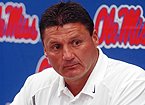
Recently my friend and I got into a discussion about college coaches and we soon realized how loaded the SEC is with quality coaches. Every coach in the league with the exception of the above pictured gentlemen have a pretty good track record when it comes to coaching em' up, either at their current school or somewhere in the recent past. Now to be fair, both Ed Orgeron and Sylvester Croom stepped into tough situations at their respective universities. And if you believe what you read, Orgeron is a great recruiter so maybe Ole Miss will rise up in the near future. Croom's teams have improved (at least in regard to point differential) every season so maybe the Bulldog faithful have hope too. However, since those two have the least impressive credentials, I'm leaving them out of the discussion. Below the other ten coaches in the SEC are listed alphabetically along with their resumes.

Rich Brooks
22 seasons
Record: 106-141-4 .430
Brooks’ winning percentage is not that good, but he has taken Oregon and Kentucky (two programs that were not exactly elite when he got there) to 5 combined bowl games, going 2-3. He also won a conference title at Oregon in 1994, the schools first conference title in 37 years.

Phillip Fulmer
14.5 seasons
Record: 137-41 .770
Fulmer has had only one losing season in his 14+ seasons in Knoxville. He has won a national title (1998) as well as two conference titles and 4 SEC Eastern Division titles. He has taken the Vols to 14 bowl games going 7-7.

Bobby Johnson
13 seasons
Record: 73-77 .487
Johnson has made the Vanderbilt program competitive. His teams were a combined 6-29 his first three seasons, but have made strides the past two seasons going 5-6 (narrowly missing out on a bowl) and 4-8. Two seasons ago they beat Tennessee for the first time since Reconstruction and this past year they upset Georgia in Athens. Johnson was 58-34 (.630) in 8 seasons at Furman. He won one conference title, made 4 playoff appearances, and participated in the national championship game in his final season (2001).

Urban Meyer
6 seasons
Record: 61-12 .836
Meyer just won the national championship at Florida in only his second year. His teams have never lost more than 3 games in any one season. He has taken his teams to 4 bowl games, never losing a single one. He has 3 conference titles and the first ever BCS bowl appearance by a program outside the BCS leagues.

Les Miles
6 seasons
Record: 50-25 .667
Miles spent 4 years at Oklahoma State rebuilding that program and just finished his second season at LSU maintaining that program’s status as one of college football’s elite. His only losing season was his first in Stillwater. His teams have gone to 5 bowl games, winning 3, and he has an SEC Western Division title.

Houston Nutt
14 seasons
Record: 102-67 .604
Nutt has taken the Razorbacks to 7 bowl games in 9 years, winning two of them, and also taking two SEC Western Division titles. Prior to coming to Fayetteville, he spent 4 seasons at Murray State amassing two playoff appearances. He also spent one year (1997) at Boise State, coaxing the Broncos to a 4-7 record in only their second year of play in Division IA.

Mark Richt
6 seasons
Record: 61-17 .782
Richt has never had a losing season at Georgia nor has he lost more than 4 games in any one season. The Dawgs have gone to 6 bowl games (4-2 record), and have 3 SEC Eastern Division tiles to go along with 2 wins in the SEC Championship Game.

Nick Saban
11 seasons
Record: 91-42-1 .683
Little Nicky has never had a losing season and has coached his teams 9 bowl games where they have posted a 4-5 record. He has 2 SEC Western Division titles and 2 wins in the SEC Championship game. He also won a MAC Championship in his only year at Toledo. Oh and he won it all in 2003.

Steve Spurrier
17 seasons
Record: 157-50 .756
Spurrier has had but one losing season in his career (his first year at Duke). He also won a conference championship at Duke to go along with the 6 he won at Florida. His teams have gone to 14 bowl games winning 8. He also won Florida’s first (and until this season only national title) in 1996.

Tommy Tuberville
12 seasons
Record: 96-49 .662
Tuberville has had just two losing seasons in his 12 years roaming the sidelines at Ole Miss and Auburn. His teams have participated in 8 bowl games, winning 5. He has 2 SEC Western Division titles and one win in the SEC Championship Game. He also had an undefeated season in 2004, but did not get to participate in the BCS title game (Orange Bowl) because there were 3 undefeateds that season. He’s 6-2 against archrival Alabama (including 5 straight wins). And his record since 2000 is 66-23 (.742).

Now, I'm leaving it up to you. Who is the SEC's best coach? Use any definition of coaching you want (getting the best out of what you have, best X's and O's guy, best winning percentage, most wins, best Under Armor commercials, etc.) and let me know how you would rank these 10 gentlemen.

Tuesday, January 09, 2007

Championship Game Fall-Out


Well, that went about as expected. Not even the most ardent UF supporter could have seen that coming. If you introduced one of your foreign friends to this game and told them before hand that one team had the Heisman winner, one of the nation's top defense, a very good big game coach, and an undefeated record while the other team had a somewhat shaky quarterback, an offense that couldn't generate much offense against good teams, a very good defense themselves, and a good record built up by several close wins here's guessing they would have thought Florida was the undefeated team and Chris Leak was the Heisman winner. Ohio State would have been the team with the shaky offense, and Troy Smith would have been, well Reggie Ball? Smith's final stat line read 4-14 for 35 yards and one pick. In backyard football, those numbers will only net you two first downs.

Sporting events like this are good because they let you know a few things. First, you can never know everything there is to know about football. Every day you learn just a bit more. Secondly, statsitcis can only tell you so much. Every stat in the book predicted an OSU win, if not a blowout. Yet, the Gators were the team that thoroughly dominated--and yes they dominated, the Buckeyes. They held OSU to 82 total yards and one offensive touchdown. This wasn't a New England Patriots/St. Louis Rams upset where the underdog held on for dear life to win down the stretch. No the Gators dominated from just after the opening kickoff. You would have made a ton of money laying 27 points for the Gators about 16 seconds into the game after Ted Ginn Jr. ran the opening kick back.

Why didn't we see this coming? Florida barely survived Vanderbilt and South Carolina, yet here they were marching up and down the field on Ohio State while stifling their vaunted offense. Everyone knew the Gators came in with a superb defense, but to suggest beforehand they would humble the Buckeyes in this manner was unimagineable. Was it the month Urban Meyer had to prepare that made the Gators so unstoppable? Was it Tressel's refusal to adjust his defensive strategy? The Buckeye defensive backs were hardly ever in the picture when Florida snapped the ball allowing countless short completion after short sompletion. Was it motivation? Did Ohio State get full of its own hubris? Were the Gators bristling from all the disrespect that they were unbeatable? Probably a combination of all these things and a few others. The important thing is that although this site is called Statistically Speaking, sometimes statistics just get it wrong. I saw the Gators as a flawed offensive team that squeaked by several mediocre at best foes. And the Gators may still yet have to pay the piper for all their close wins. I saw the Buckeyes as a great team that obliterated everyone in their path. Statistics aren't perfect, just a tool for making rational decisions. Picking Ohio State to win this game was a very rational decision, but as they say: That's why you play the game.

Monday, January 08, 2007

Fies--Err BCS Championship Game Preview


Record: 21-10

BCS Championship Game: Florida versus Ohio State

So after folks have had two months to talk themselves into a Gators upset, reality will set in about 9:25 EST tonight. Does Florida have a chance? Sure they do. I'd say probably 30-35%. But seriously, lets look at the facts. The Gators scored 17 against a South Carolina team that couldn't stop Houston. They scored 21 on Florida State. Wake Forest scored 30 against the Noles. Chris Leak will certainly throw at least two picks off his back foot, the game will be close at halftime, and the Buckeyes will roll in the second half.

Sunday, January 07, 2007

GMAC Bowl Preview


Record: 20-10


GMAC Bowl: Ohio versus Southern Miss

The GMAC Bowl will serve as a nice ending to a day filled with football. After two do-or-die NFL playoff games, fans can sit back and enjoy an exhibition. And if the game sucks, and you end up going to bed early? So what, you have work tomorrow.

The work that Frank Solich has done at Ohio in just his second season is outstanding. Though he has been overshadowed by Jim Grobe, Greg Schiano, and even Dick Tomey, its time to give the man his due. Unjustly fired from Nebraska three seasons ago, Solich could actually finish this season with a better record (10-4) than Bill Callahan (9-4). To do so, the Bobcats will have to defeat Conference USA runner-up Southern Miss.

In a flip-flop more egregious than those of John Kerry or even Jay Mariotti—here’s why Ohio doesn’t stand a chance. The Bobcats are 9-4, but they only do three things particularly well—return punts, cover them, and cover kickoffs (12th nationally in returns, 6th in covering punts, and 3rd in covering kickoffs). They are also 34th in kickoff returns which is good but not great. They averaged only 4.02 yards per rush and Ohio quarterbacks managed only 8 touchdown passes against 13 interceptions on the season. Defensively, opponents averaged 4.10 yards per rush against Ohio and threw 14 touchdown passes against 12 interceptions. Without those stellar special teams, Ohio probably wins 5 or 6 games.

Southern Miss is pretty good offensively (4.54 yards per rush to go along with 14 touchdown passes and just 6 interceptions) and defensively (4.01 yards allowed per rush with 13 touchdown passes allowed and 15 interceptions). The Eagles are average in covering punts (50th in the country) and pretty bad at covering kickoffs (117th). Similarly, they are average in returning punts (49th) and a touch worse at returning kickoffs (79th). Still, their advantage on offense and defense should provide them with a substantial edge.

Prediction: Ohio can only win this game if they return a considerable portion of the Golden Eagles punt and kickoffs back a long way, don’t commit any turnovers on offense, and get at least three for themselves from Southern Miss. Ohio has had a nice season, but will finish the year on a two-game losing streak.

Saturday, January 06, 2007

International Bowl Preview


Record: 20-9


International Bowl: Cincinnati versus Western Michigan

For those of you who don’t know, there are two more bowl games to be played before the BCS Championship Game on Monday night. On of them is Saturday at Noon in the International Bowl. If you’re a fan of the Broncos or Bearcats, or if you’re hankering for an upset check this one out.

The story of this game is the Western Michigan Broncos and their coach Bill Cubit, who has proven that he is no zirconium in his two seasons at the school. The Broncos were 1-10 in 2004, but Cubit has gone an outstanding 15-8 in his two plus seasons on the job. The Broncos win games with their passing attack and their defense. Senior quarterback Ryan Cubit completed over 62% of his passes and while throwing 15 touchdowns and 11 interceptions. Defensively the Broncos are led by Ameer Ismail and his 17 sacks which oh by the way led the nation. With Ismail, the Broncos were very stout on defense. They held opponents to only 2.49 yards per rush and also played effectively against the pass (12 touchdowns and 22 interceptions against).

The Bearcats were very average on offense, something that does not bode well when facing the defense of Western Michigan. They averaged only 3.36 yards per rush and threw the same number of interceptions (15) as touchdowns. Defensively, the Bearcats put up very similar numbers. Opponents averaged 3.69 yards per rush and threw 12 touchdown passes against 12 interceptions.

Cincinnati also went 1-4 away from home this season (though to be fair the 4 losses were to Ohio State, Virginia Tech, Louisville, and West Virginia). On the other hand, Western Michigan was able to go a respectable 3-4 on the road including winning at Virginia and playing Florida State down to the wire. So how is Cincy a 7 point favorite? Beats me. They have a new coach and seem to about even with Western Michigan when you adjust for the strength of their respective schedules. The only aspect of the game Western Michigan should be a little nervous about is punt coverage. The Broncos were 98th in the nation allowing 11.31 yards per return (and 3 touchdowns). However, Cincinnati was only 91st in the nation at returning kickoffs.

Prediction: The Broncos are about even with Cincinnati in terms of team strength plus they don’t have to deal with a new coach for the bowl game. Brian Kelly is a great hire for Cincy, but he will not win his debut.

Saturday, December 30, 2006

Bowl Nutshells

Since I'm off to sunny Miami and the Orange Bowl, the rest of the bowl previews will be abridged.

Record: 13-4


Meineke Car Care Bowl: Boston College versus Navy

Will be Boston College be motivated to play in another mid-level bowl game against another mid-level opponent sans coach Tom O’Brien? Can the Eagles shut down the Navy running attack? Navy quarterbacks threw for only a shade over 600 yards all season. If the Midshipmen are forced to throw the ball more than 11 or 12 times, they will probably be on the short end of things. Boston College was able to shut down the running game pretty effectively all season (3.19 yards per rush) so that trend should continue here. Keep an eye on the Eagles’ special teams—4th in the nation in kickoff return average and 14th in the nation in kickoff return defense.

Prediction: This game should be close (7 of BC’s games were decided by 7 points or less), but expect the superior size and athleticism of Boston College to be the difference.


Alamo Bowl: Iowa versus Texas

The Alamo Bowl matches up two teams looking to shake off some respective disappointments. Iowa was thought to be a preseason Big 10 sleeper, but they stumbled through a 2-6 conference season. Texas was in the national title race on Veteran’s Day, but two conference losses later, and they didn’t even get he chance to win the Big 12 title. Quarterback Colt McCoy gets the headlines for Texas and rightfully so, but the bigger story has been the play of the Texas defense. The run defense was great, limiting opponents to 2.32 yards per rush, but the pass defense was not nearly as strong (allowed 19 touchdown passes while intercepting only 12). Iowa counters with mediocrity across the board, especially at the quarterback position. Last season Drew Tate completed 62% of his passes with 22 touchdowns and only 7 interceptions. This season he completed a still good 59% of his passes, but threw just 16 touchdowns and 12 interceptions

Prediction: Texas is hardly the juggernaut they were last season—having been somewhat exposed in losses to Kansas State and Texas A&M (and the near loss to Nebraska). Iowa is a bad football team that benefited greatly from the NCAA’s 12th game. Away from home, the Hawkeyes beat Syracuse (4-8) and Illinois (2-10). Texas is in a different league than those two schools. The Longhorns remember the Alamo.


Chick-Fil-A Bowl: Georgia versus Virginia Tech

The Chick-Fil-A Bowl should be a defensive aficionado’s dream featuring the number one scoring defense in the nation (Virginia Tech) and the 22nd ranked scoring defense (Georgia). The Hokies have won their last 6 games and have allowed only 2 touchdowns in that span. They had to be carried by their defense because the running game was not strong this season (3.34 yards per rush). Georgia also comes in on a roll. After a 1-4 midseason stretch, the Bulldogs won their last two against Auburn (10-2) and Georgia Tech (9-4). Georgia’s main problem this season on offense was the play of their quarterbacks. Georgia quarterbacks combined to complete only 55% of their passes for just 11 touchdowns and 15 interceptions.

Prediction: The Hokie defense is a little bit stronger, and their quarterback play is a little bit better. The Hokies win what should be a very close game.


MPC Computers Bowl: Miami versus Nevada

Don’t be surprised of Miami finishes with a 6-7 record. The Wolfpack are a pretty good team. They do a lot of things well. Their senior quarterback Jeff Rowe completed nearly 65% of his passes and threw 16 touchdowns and just 7 interceptions. Their defense intercepted 19 passes on the year while allowing only 13 touchdown passes. They are 9th in the nation in average per punt return and 15th in the nation in average per kickoff return. On the other sideline, Miami does one thing well—play defense. They average only 3.70 yards per rush and threw just 14 touchdown passes all year. They broke 20 points in 5 games (Florida A&M, North Carolina, Florida International, Duke, and Georgia Tech). 4 of those teams are not known for their stout defenses. The Hurricanes did hold opponents to 2.24 yards per rush and allowed only 8 touchdown passes all year.

Prediction: To win this game, the Hurricanes will have to hold Nevada to under 17 points because their offense will not score more than that. With Nevada’s experienced offense and solid special teams, I don’t believe the ‘Canes can do that. Miami heads into the off season with a 6-7 record.


Outback Bowl: Penn State versus Tennessee

Both of these proud programs have not participated in bowls in the same season since 2002. Pretty amazing. Tennessee saw their offense (at least the passing game) take a dramatic step up from a disappointing 2005. Erik Ainge went from completing less than half his passes with 5 touchdowns and 7 interceptions last season to completing over two-thirds of his passes with 19 touchdowns and just 8 interceptions. The Nittany Lions are making consecutive bowl appearances for the first time since 1999. They were led by their fantastic defense. Opponents averaged only 2.80 yards per rush and managed only 10 touchdown passes while throwing 12 interceptions. They had to be strong to compensate for an offense that was not nearly as strong as it was last season. Keep an eye on Tennessee’s atrocious kickoff return game (118th in the country—next to last in average kickoff return).

Prediction: Joe Pa’s boys simply do not have enough offense to keep up with the Vols. This game should be close until the fourth when the Vols will go up by two scores—an insurmountable margin for the Penn State offense.


Cotton Bowl: Auburn versus Nebraska

Auburn went 10-2 in the regular season, but they failed to win the SEC West because of Brandon Cox’s play at the quarterback position. A year after throwing 15 touchdowns and just 8 interceptions as a sophomore, Cox slumped somewhat in 2006. He threw just 13 touchdown passes and 9 interceptions—still solid numbers, but not the progression most Auburn fans and coaches were expecting. The Cornhuskers had a successful 9-4 season because of the play of their quarterback Zac Taylor. The senior, under the tutelage of Bill Callahan, helped make Nebraska a dominant passing team. He threw 25 touchdowns and just 7 interceptions while guiding the Huskers explosive offense.

Prediction: The Huskers offense was shut down in only two games all year—Southern Cal and Oklahoma. Auburn has a pretty good defense, but it is not in that league. Nebraska sends Auburn to their second straight bowl loss.


Gator Bowl: Georgia Tech versus West Virginia

On Thanksgiving, Georgia Tech was 9-2 with losses to Notre Dame and Clemson, and looked poised to end their string of 5 loss seasons. Two terrible performances by Reggie Ball, and two close losses and the Jackets look poised to lose 5 games yet again. Reggie Ball won’t be playing, so maybe that favors the Yellow Jackets. Defensively, the Jackets were very good against the run (allowed 2.88 yards per rush) and they will need to bring their A game to slow down the West Virginia running game. The Mountaineers averaged 6.66 yards per rush and scored 45 touchdowns on the ground. They were held below 4 yards per rush in only two games (East Carolina and South Florida). Defensively, West Virginia played pretty well against the run (2.81 yards per rush allowed) and pass (15 interceptions and 14 touchdown passes allowed), except in the Louisville game where they allowed 44 points and had a touch of fumble-itis.

Prediction: Unless the Mountaineers commit a ton of turnovers, they should win the Gator Bowl rather easily. Georgia Tech will lose 5 games yet again.


Capital One Bowl: Arkansas versus Wisconsin

Wisconsin may be one of the most lightly regarded BCS 1-loss teams of recent memory. The Badgers did play a relatively soft schedule, but they won all their games save for the roadie at Michigan. The Badgers are pretty good against the run (allowing only 3.56 yards per rush), but they are superb against the pass (only 6 touchdown passes allowed all year). Fortunately for Arkansas, their offense is predicated on the run, led by stud back Darren McFadden. The Hogs averaged 5.88 yards per rush while gaining nearly 3000 yards on the year. Until the last 2 games they were also pretty solid throwing the ball too. They finished the year with a respectable touchdown to interception ratio of 23:16. The only downside to the passing attack was its inconsistency (51% completion percentage).

Prediction: Wisconsin’s defense is strong enough to force Arkansas into more than a few 3rd downs where they are forced to pass. That will be the Hogs undoing and they will finish the year on a 3-game skid.


Rose Bowl: Michigan versus Southern Cal

The Rose Bowl should certainly live up to the hype that has been generated. Both teams have stout defenses. Michigan is unbelievable against the run, holding opponents to 1.86 yards per rush, although they were gouged in the finale against Ohio State (allowed 6.45 yards per carry). Against the pass, they were mortal though, allowing 15 touchdowns while intercepting 12 passes. The Trojans were not as strong as the Wolverines against the run (allowing 3.15 yards per rush), but are a little better against the pass (11 touchdown passes allowed and 10 interceptions).

Prediction: The difference in this game will be the Trojans offense. The Trojans may not be able to run the ball against Michigan, but they should be able to throw on the Wolverines. The Trojans win a classic in the Rose Bowl.


Fiesta Bowl: Boise State versus Oklahoma

Cinderella comes to the ball. The most interesting aspect of this game for me will be whether Ian Johnson (6.38 yards per rush and 24 touchdowns) will be able to run against the Oklahoma defense (3.29 yards allowed per rush). Also, don’t overlook the Boise State defense. The Broncos allowed 3.05 yards per rush and intercepted 17 passes while allowing 15 scores through the air. Keep an eye on Oklahoma kicker Garrett Hartley. He has made 17 of 18 field goals on the year and could be the difference in a close game.

Prediction: As long as Jared Zabransky does not play like he did against Georgia on Labor Day Weekend 2005, the Broncos will be in this game. Oklahoma is not the juggernaut they have been in past years, but they will do just enough to get by Boise.


Orange Bowl: Louisville versus Wake Forest

Wake Forest has had a nice season and is pretty strong defensively. They allowed only 3.10 yards per rush and picked off twice as many passes (22) as they allowed through the air (11). Still the Deacons have not faced an offense as talented as Louisville all season. The Deacons were also aided by an exemplary 5-0 record in close games.

Prediction: Unfortunately, midnight will come for the Demon Deacons on January 2nd. As long as they are careful with the football, the Deacons should be in the game, but they do not have the offensive firepower to win this game.


Sugar Bowl: LSU versus Notre Dame

This sure looks a lot like last year’s Fiesta Bowl when an undeserving Notre Dame team went up against the best 2-loss team in the nation. Losing your last game by 20 points and then just strolling on into the BCS just doesn’t seem right. Here’s all you need to know about Notre Dame’s porous and poor defense: Opponents threw 22 touchdown passes and just 10 interceptions against them.

Prediction: Perhaps I’m a bit biased, but this game just seems like a total mismatch. Both teams have stellar offenses, but Notre Dame’s defense just isn’t good and LSU’s is elite. LSU in a rout.

Friday, December 29, 2006

Bowl Preview: Five for Friday

Record: 11-1


Music City Bowl: Clemson versus Kentucky

The Clemson Tigers look to end their season on a positive note. In late October, the Tigers stood 7-1 and appeared to be the class of the ACC. Looking ahead they had three of their final four games at home and seemed to have the inside track to an ACC Championship. Three losses later, the Tigers are once again bound for a mid-level bowl against a mid-level opponent.

The Tigers strength is their running game. The Tigers rushed for over 2700 yards and averaged 5.75 yards per attempt while scoring 31 touchdowns. The dynamic duo of James Davis and C.J. Spiller power the Tigers ground attack. Don’t look now though, but James Davis has struggled of late. In the Tigers last season swoon Davis has rushed for only 173 yards on 56 carries (3.09 average per rush). If Tommy Bowden has any coaching acumen he will use Spiller as the primary runner against the porous Kentucky defense.

Clemson’s defense was very good this season. Their run defense was exceptionally strong holding opponents to under 3 yards per rush (2.93). The pass defense was also very good. Opponents completed only 54% of their passes for an average of only 5.62 yards per attempt. Opposing quarterbacks also threw only 6 touchdowns all season and 14 interceptions. With such great numbers how did the Tigers lose 4 games? Special teams and quarterbacks. The Tigers were 114th in the nation in kickoff return defense. They allow over 24 yards per return, and this facet of the game is almost the sole reason they lost to Boston College. While quarterback Will Proctor had very solid full season stats, either he was playing well over his head, or coaches have spotted something on film because he has not been the same player as of late. He has thrown just 6 touchdowns and 8 interceptions in the Tigers last 7 games. Remove the beatdown of Temple, and the touchdown number drops to 4.

The Kentucky Wildcats enjoyed a solid season, finishing 4-4 in SEC play, a full game ahead of the Gamecocks. The Wildcats were led by their passing game. Junior quarterback Andre Woodson completed 62% of his passes while averaging 8.23 yards per attempt. He also amassed 28 touchdown passes and just 7 interceptions. It’s a good thing too because the Kentucky running game was pretty awful. The ‘Cats averaged just 3.19 yards per rush on the season. Only against Texas State and Tennessee did the ‘Cats break 4 yards per carry.

Defensively, Kentucky is dreadful. They gave up over 5 yards per rush and gave up 21 touchdown passes while grabbing only 13 interceptions. Clemson should be able to move the ball at will against the Kentucky defense. Kentucky does have very good special teams that may allow them to hang in the game with the Tigers. They are first in the country average yardage per punt return. They are 10th in the nation in average yardage per kickoff return. They also cover kicks very well—7th in average punt return yardage against and 24th in average kickoff return yardage against.

Prediction: The only chance Kentucky has to win this game is to make several big plays in their kickoff and punt return games. I expect them to have one or two good returns, but with the way their defense will likely play it may take 4 or 5 returns. Kentucky will keep this game close for awhile, but will not be able to consistently stop the Tigers running attack.


Sun Bowl: Missouri versus Oregon State

The Beavers have come a long way since losing by 28 at Boise State in late September. They have won 7 of 8 including a home upset of Southern Cal and a very good road win at Hawaii. The Beavers have an offense that is very workmanlike. The Beavers average only 3.49 yards per rush and have only 16 touchdown passes all year. They are safe with the ball though, having thrown only 8 interceptions all season. Like Kansas State, the Beavers win games with their outstanding return game. The Beavers are 7th in the nation in punt return average. They have run 3 kicks back for scores and average 14.69 yards per attempt. They are 27th in the nation in kickoff return average. Special teams put their less than special offense in good field position.

The Beavers do have a pretty strong defense. They held opponents to only 3.26 yards per rush, and if we remove the debacle against Boise State, that number drops to 2.81 per rush. The Beavers were also dam good against the pass too. Opponents completed only 54% of their passes while throwing 14 touchdowns and 17 interceptions. The one area where Oregon State is very weak is covering punts. They are 105th in the country, allowing 11.84 yards per punt return.

Missouri lost one of the best players in the programs history, Brad Smith, and actually had a better season. The season ended on a somewhat sour note as the Tigers lost 3 of 4 including one to previously winless (in the Big 12) Iowa State. Missouri is led by their outstanding quarterback Chase Daniel. Daniel completed 64% of his passes for 26 touchdowns and only 10 interceptions. Daniel also proved himself to be a capable runner, accumulating nearly 400 yards on the ground and 4 touchdowns.

Defensively, Missouri is solid. They allow only 3.78 yards per rush. Opponents passed for only 15 touchdowns on the year and the Tigers grabbed 12 interceptions. No one will confuse them with Ohio State, but they are a solid unit.

Prediction: The key to this game will be 3rd downs. The Tigers were 8th in the nation in converting 3rd downs. They converted 49.2% of 3rd downs primarily because they put themselves in good position by being efficient on first and second down. If the Beavers are able to get off the field on 3rd down they will win. This game should an entertaining low-scoring affair because the Beavers have a good defense to counter Missouri’s superior offense, but are not explosive enough on offense to take advantage of Missouri’s average defense. The Beavers will make a few plays in the return game to enable them to take the Sun Bowl.


Liberty Bowl: Houston versus South Carolina

Don’t count the Cougars out just because they are taking on the Ol’ Ball Coach. The Cougars have an offense Steve Spurrier would be proud of. They average 4.86 yards per rush and have 27 touchdowns on the ground, but the real story is their passing attack. Quarterback Kevin Kolb completed over 67% of his passes while averaging 8.71 yards per attempt. However, the most amazing statistic is that he threw 27 touchdowns and just 3 interceptions on the season. He also did not have a game where his quarterback rating was below 100.

Defensively, the Cocks should be able to take advantage of the Cougars average defense. The Cougars allow 4.15 yards per rush (solid, but nor great) and have given up 17 touchdown passes while grabbing only 11 interceptions. On defense, the Cougars do not cover punts well (97th nationally in average yards allowed per return), but they do cover kickoffs very well (9th nationally in average yards allowed per return).

Spurrier’s second team at South Carolina was somewhat of a disappointment in conference play (only 3-5), and they did lose 3 of their last 5. However, all three losses were close (by a combined 14 points) and they were all to good teams (Tennessee was the worst of the bunch at 9-3) and they did beat Clemson to end the season. South Carolina runs the ball well (averaging 4.52 yards per rush) and their passing attack has improved as the season has progressed (despite the 3 picks in the Clemson game).

Defensively, the Cocks are pretty good against the run (allowing 4.07 yards per rush). They were even better against the pass, holding opponents to a 52% completion rate while allowing only 10 touchdown passes all year. On special teams, the Cocks are not exceptional either way except in covering punts where they are exceptionally bad. They rank 111th in the nation allowing 13.54 yards per rush.

Prediction: South Carolina should win, but don’t be surprised if Houston gives South Carolina a problem. The Cougars have a very good offense and should be able to hang in there for 4 quarters,


Insight Bowl: Minnesota versus Texas Tech

The Red Raiders do what the always do. They threw a lot of passes (3 times as often as they ran) and threw them well (nearly 67% completion rate, 37 touchdowns, and just 10 interceptions). They were decent on defense, but really in Lubbock, defense is just a time for the offense to catch its collective breath. The Red Raiders did their best to allow the offense the real estate to compile a ton of yardage. They averaged only 16.59 yards per kickoff return (117th in the nation). Amazingly, opposing kickers made 17 of their 18 field goal attempts.

The Gophers also did what they always do—run the football. They accumulated over 1800 yards on the ground and averaged 4.3 yards per rush. They also passed the ball well. Senior Bryan Cupito completed nearly 60% of his passes for 19 touchdowns and just 8 interceptions. Defensively, the Gophers allowed 4.24 yards per rush and were able to grab 16 interceptions. However, they also allowed 22 touchdown passes.

Prediction: The Gophers and Red Raiders seem to be about even, but the Red Raiders have a better record because of the Gophers arduous schedule. Not that Texas Tech play cupcakes, but the Gophers losses came to Ohio State (12-0), Michigan (11-1), Wisconsin (11-1), Cal (9-3), Penn State (8-4)—in a game where they wuz robbed, and Purdue (8-5). The only loss to be somewhat ashamed of was to Purdue. The Gophers never quit either. They stood 3-6 at the beginning of November, but rebounded to win 3 in a row against other teams competing for bowl bids (Indiana and Iowa) and a team that admittedly had probably quit (Michigan State). The Gophers are pretty big dogs, but they will upset the Red Raiders.


Champs Sports Bowl: Maryland versus Purdue

The Maryland Terrapins are an enigma. They do not run the ball particularly well, averaging 3.71 yards per attempt. Their passing game is not extremely powerful, with just 14 touchdown passes and 12 interceptions on the year. Opponents averaged 4.68 yards per rush and opposing quarterbacks have nearly doubled up their interceptions (7) with 13 touchdowns. The Terps were not particularly effective covering punts (113th in the nation in average punt returns allowed) or kickoffs (68th in the nation). They are also pretty mediocre at returning punts (56th in the nation in punt return average). They do return kickoffs well (18th in the country in average per return). However, the Terps are simply very lucky. They were an amazing 6-1 in close games, something that does not portend good things for the future.

On the other sideline, Purdue loves to throw the ball around. They haven’t done it quite as well this year as they have in the past (23 touchdown passes but 19 interceptions). The Boilers actually ran the ball pretty well too—over 1700 yards with a 4.44 average per attempt. Joe Tiller was not able to craft a very good defense. The Boilers gave up over 5 yards per rush (5.02) and allowed opponents to toss 18 touchdowns while intercepting just 11 passes. The Boilers do cover kickoffs very well. They are 3rd in the nation allowing only 15.06 yards per kickoff return.

Prediction: Despite their 8-4 record, Maryland is simply not that good. Purdue will not conjure up visions of 1995 Nebraska either, but they should eke out a win over the Terps. They been dancing for quite a while with their luck in close games, so its time to pay the piper.

Thursday, December 28, 2006

Bowl Preview: Independence, Holiday, and Texas

Record: 8-1


Independence Bowl: Alabama versus Oklahoma State

Rumor has it Alabama will be using the latest technological advances in genetics and cloning to create an amalgamation of Bear Bryant, Amos Alonzo Stagg, and Bud Wilkinson to coach the team next season. Using the latest advances in time travel, I can tell you that Alabama will fire Bear Alonzo Wilkinson at the conclusion of his fourth season. All kidding aside, the Independence Bowl should be an entertaining bout between two teams that could not be more different.

The Crimson Tide are led by their defense. While not at the elite level it attained last season, the defense is still quite good. The Tide were pretty good against the run, holding opponents to 3.84 yards per rush. The Tide were gouged on the ground by LSU, Arkansas, and Duke?!, but held their own in the other 7 games. The Tide pass defense was probably the team’s strong suit. Only two quarterbacks (Chris Leak and JaMarcus Russell) had good games against their pass defense. Collectively, opponents completed 56% of their passes for an average of 6.77 per attempt with 14 touchdowns and 15 interceptions. If we remove those two stars from the equation, those numbers fall to 53%, 6.31 per attempt, 9 touchdowns, and 15 interceptions.

Offensively, Alabama is solid, but hardly spectacular. Their running game is rather ho-hum. Collectively, Tide rushers averaged only 3.54 yards per carry, and the team scored only 8 rushing touchdowns. The Tide passing attack was the offenses strength. Quarterback John Parker Wilson will not be confused with Colt Brennan or Brady Quinn, but he protected the ball well (only 9 interceptions) while throwing 16 touchdowns.

On the other sideline, the Cowboys rebounded nicely from a forgettable 2005 season. After averaging only 20.2 points per game last season, their offense dramatically improved, increasing their average to 35.3 per game. The Cowboys improved from 4-7 (1-7 in Big 12 play) to 6-6 (3-5 in Big 12 play). The Cowboys were also much better than their record as they were an unlucky 0-4 in close games. Oklahoma State is strong in both the running game and passing games, at least on offense. They averaged 5.19 yards per rush and had 25 touchdowns on the ground. Through the air, the Cowboys love to bomb away. Quarterbacks completed only 55% of their passes, but those passes traveled an average of 8.29 yards meaning there were a lot of throws down the field. There were also 26 touchdowns and just 10 interceptions. Quarterback Bobby Reid not only throws a good deep ball, but he is also a dual-threat as a runner (over 450 yards and 5 touchdowns). Also keep a look out for receiver Adarius Bowman. He had only two games over 100 yards, but one of them was a 13 catch 300 yard day against Kansas.

The reason the Cowboys were 6-6, and part of the reason they lost so many close games, is because they are very weak in the two other aspects of football: defense and special teams. The Cowboys did a decent job stopping the run, allowing only 4.10 yards per rush. However, the Cowboys allowed opposing quarterbacks to complete over 61% of their passes and throw for 19 touchdowns. The Cowboys also intercepted only 9 passes on the year. And special teams? The Cowboys are awful covering both punts (102nd nationally) and kickoffs (91st) in terms of average yardage allowed per return. To be fair, the Cowboys do return both punts (17th nationally) and kickoffs (8th) very well.

Prediction: Despite the fact that Oklahoma State is about as close to a one-trick pony as you will find in this year’s postseason, their offense will simply overwhelm Alabama. Expect some real fireworks for both sides on special teams’ returns in this game.


Holiday Bowl: California versus Texas A&M

For the fifth straight year, Cal has won at least 7 games and for the fourth straight season, Cal is in a bowl game. Not bad for a team that was 1-10 the year before Jeff Tedford arrived. Don’t worry Cal fans, the Pac 10 title will come, but for now The Bears must concentrate on playing better in the Holiday Bowl than they did two years ago when they were spanked by an underdog from Texas.

As is usually the case under Jeff Tedford, Cal is very efficient on offense. Their running game averages over 4.7 yards per rush and their passing attack has accumulated 24 touchdowns against just 13 interceptions all year. Cal is also fairly strong on defense, at least more so than they are given credit for. They stop the run reasonably well (3.7 yards per rush) and opponents have thrown more interceptions (20) against them than touchdowns (16).

The Golden Bears also usually have good field position after their defense makes opponents punt. The Bears are fourth in the NCAA averaging 17.26 yards per return. Wide receiver DeSean Jackson has taken four kicks back to the house and is reason enough to not slip off to the fridge when the Aggies are punting.

Speaking of the Aggies, Dennis Franchione may have saved his job, at least until he loses to Texas again, after going 9-3. 8 of their 12 games were decided by 6 points or less. The Aggies went 5-3 in those games, so they were good, but hardly incredibly lucky. On offense, the Aggies run the football (5 yards per rush and 32 touchdowns) and are safe with the football when they throw it (only 3 interceptions all season). Sophomore quarterback Stephen McGee threw 11 of the teams 12 touchdown passes while adding over 600 yards and 4 touchdowns on the ground.

On defense, the Aggies were solid, but not particularly stout. Opponents averaged 4 yards per rush, but the good running teams (Oklahoma State and Oklahoma) were able to run the ball effectively. The Aggies were only able to grab 10 interceptions (and 4 of those came in the finale against Texas) on the year while allowing 13 touchdown passes.

Texas A&M is a solid team with a very small margin for error as evidence by the plethora of close games they played. They needed every small advantage they could get, and they were able to generate that advantage in the area of kickoff returns. The Aggies ranked second in the league in average kickoff return (27.57 per return) enabling them to begin drives with very good field position. That should help the Aggies hand with a Cal team that is simply better. However, the Aggies do have one glaring weakness on special teams—punt coverage. The Aggies finished 81st nationally in average yards allowed per punt return. If your memories short, the Bears brought 4 punts back for scores. Draw your own conclusions.

Prediction: The Aggies have played their fair share of close games, so don’t be surprised if this one goes down to the wire. Still, the Aggies advantage on kickoff returns should be neutralized by the Bears advantage on punt returns. The Bears offense is more prolific and their defense is stronger, so they will win.


Texas Bowl: Kansas State versus Rutgers

The Texas Bowl offers viewers with the NFL Network an intriguing look at two teams with similar pasts. Roughly 15 years ago, Kansas State was in Rutgers’ position—a completely worthless program that was being rebuilt and rejuvenated by an excellent coach. In the years since their rise, the Wildcats have competed for both conference and national titles before falling back on hard times. The Scarlet Knights would like to emulate most of what the Kansas State program has accomplished (sans the falling on hard times) and they can get a good start by winning their first ever bowl game.

The Scarlet Knights are powered by their running game and stellar defense. Sophomore Ray Rice went over 200 yards thrice on his way to a 1600 yard season. He also accounted for 19 touchdowns while averaging 5.22 yards per rush. The Knights will need Rice to perform well on first and second down so they can avoid putting quarterback Mike Teel in too many 3rd and longs. Teel completed only 55% of his passes and threw more interceptions (10) than touchdowns (13).

Defensively, the Knights are phenomenal. They are giving up only an eyelash over 3 yards per rush (3.01). They are also allowing quarterbacks to complete only 52% of their passes, 13 of which have been intercepted while allowing only 8 touchdowns through the air. The Knights also hope to use their solid punt return game to change field position. While the Knights rank only 49th in average per return, they have returned two punts for scores.

Glossing over the Wildcats team statistics, they hardly have the look of a 7-5 team. Their running game has been solid, averaging a respectable 4.18 yards per carry. However, whenever the Wildcats are forced to throw the football, well suffice it to say they may be better off punting on 3rd and long. Kansas State quarterbacks have completed only 52% of their throws and only 10 of those have gone for touchdowns against 18 interceptions. On the other side of the ball, Kansas State does a pretty good job of stopping the run holding opponents to under 4 yards per rush (3.95). Opponents have passed the ball pretty well against the Kansas State defense tossing 16 touchdowns and just 10 interceptions on the year while completing over 58% of their passes. So how has Kansas State won 7 games? Special teams.

The Wildcats are 32nd in the country in punt return average (11.18 per return and two scores) and they are even better at kickoff returns where they rank first in the country (27.94 per return and three scores). The Wildcats are also 11th in the country at covering kickoffs allowing only 17.31 yards per return. The Wildcats are only 64th in the country at covering punts, but to paraphrase Meatloaf, three out of four ain’t bad.

Prediction: Reasons to believe Kansas State can upset Rutgers? Motivation: Rutgers was a few plays away from playing in the Orange Bowl and are now exiled to play in a bowl game most of the country couldn’t watch if it wanted to. Special Teams: The Wildcats are great at returning both punts and kickoffs while the Knights are poor a kickoffs (93rd in the nation) and even worse at covering punts (100th in the nation). Reasons to believe Rutgers wins their first bowl game? Manhattan: Kansas State won only one game away from the Little Apple. Offense: Rutgers is better. Defense: Rutgers is better. It’s so simple when you break it down like that. Rutgers may give up some big plays on special teams, but they are stronger than Kansas State on offense and defense, so they should eventually cover the 7 to 7.5 point spread.